Buyers pick a shortlist
before they open your site.
Somebody asks an assistant for the best tool for the job. The answer names three or four products. We show you whether one of them is yours — on each assistant separately, with every answer kept.
Want to see how it works first? See prompt discovery
- Scored per assistant, never blended
- Rival names come out of the answers
- Free audit, no card
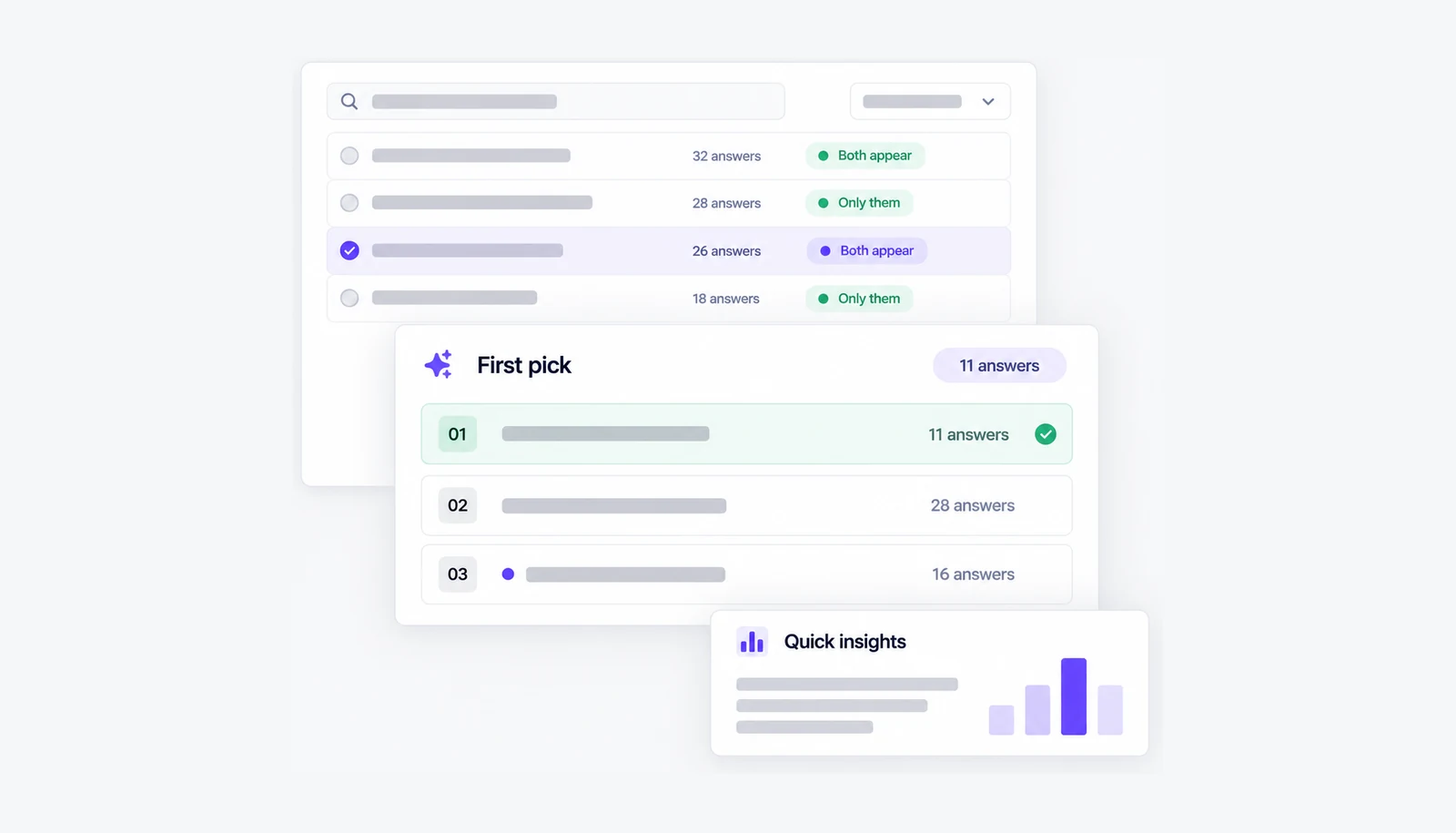
One software run, five questions, same day: named in 13 of 15 answers on Gemini and 4 of 15 on Perplexity. One blended score would have hidden both.
The shortlist gets made without you
Software buying now starts with a question to an assistant. If the answer names three tools and none is yours, the trial never happens.
- 01
There is no page two
A search page has ten links. An AI answer has three or four names. Either the paragraph says your product or the buyer never hears of you.
- 02
Zero is a normal place to start
We ran one observability product through 57 answers. It was named in none of them. The category leader was named in 49. Every demo dashboard you have seen opens at 68% — that is sample data, not yours.
- 03
One score hides the only useful thing
On another run the same five questions named the brand in 13 of 15 Gemini answers and 4 of 15 on Perplexity. Averaging those gives you a number that describes neither, and the two need different work.
- 04
Rank tracking cannot see any of this
You can hold position three for a category term and still be missing from every answer built on top of it.
A number you can defend in a board meeting
Not a score out of 100. The same locked questions, re-run on a schedule, scored per assistant, with the answers kept.
Every assistant scored on its own
ChatGPT, Perplexity, Gemini and Google's AI Overviews. They disagree with each other constantly, and the gap between them is the brief.
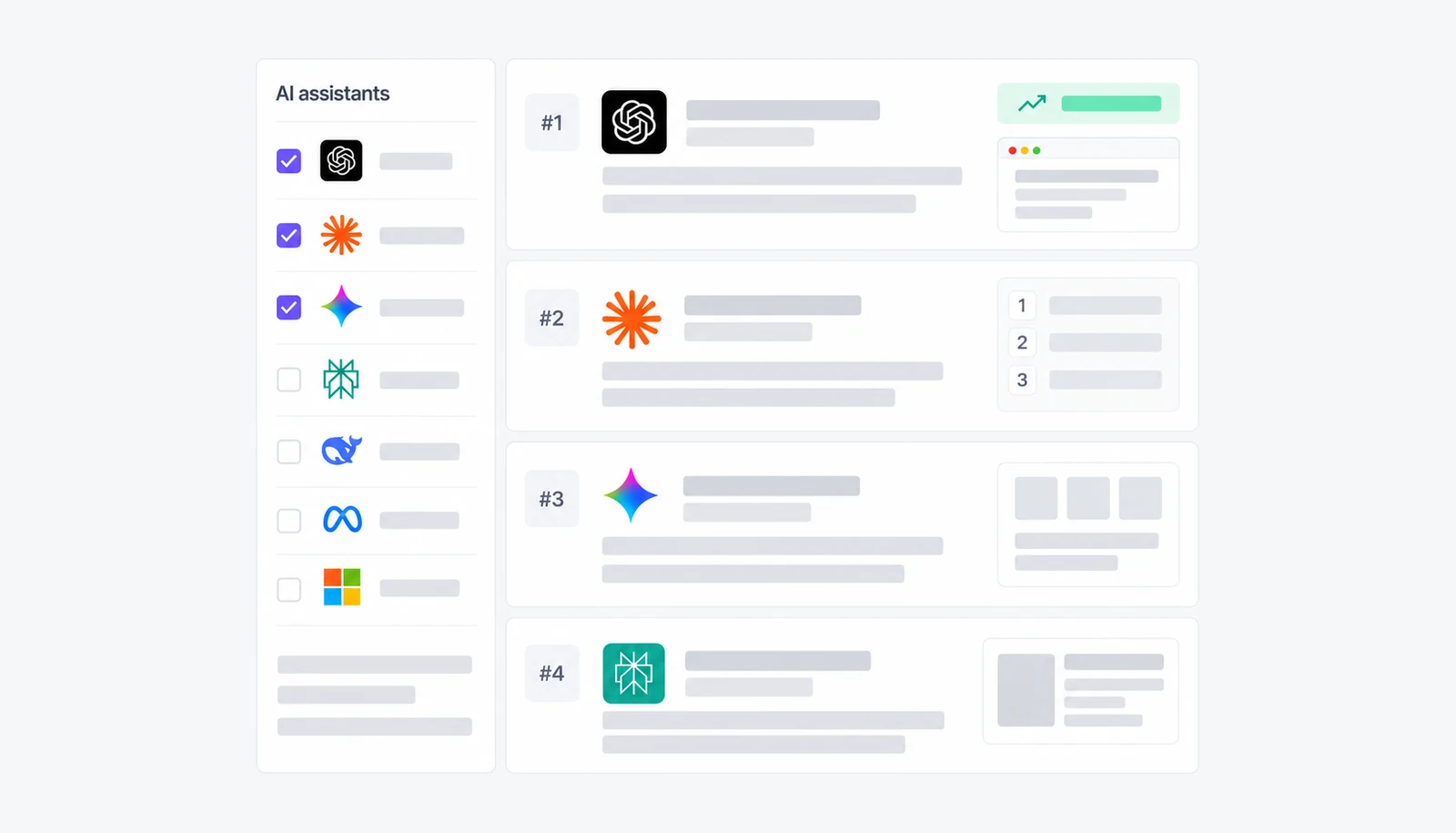
A line, not a lucky pull
Every question is asked three times per assistant, and each answer is saved with its date, engine and run. When it moves, open both.
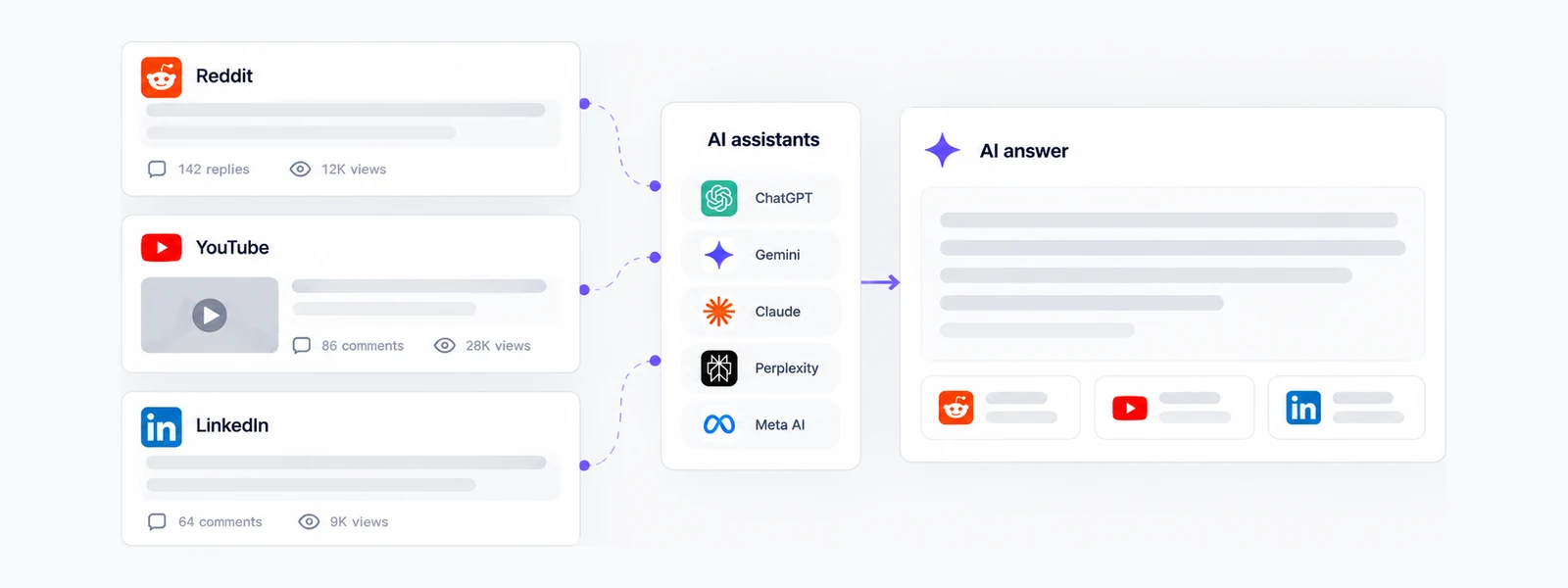
Every gap becomes one named move
The page to write or the thread to answer, cheapest first, with the answer that proves it attached to every single one.
From a category term to a backlog your writers can start
Four steps between "are we in the answer" and a list of pages to work on.
- 01
We read your site and place you in a category
It also writes down the nearby categories that are not you, so a vector database is never scored against drone flight controllers.
The right market, in writing, before anything is measured
- 02
We find the questions your buyers ask
From Reddit threads, People Also Ask, search volume and the rivals already ranking. Each keeps the line it came from. Sixty tested, five kept.
Five real questions, each with a source you can open
- 03
It runs every week
Five questions, four assistants, three runs each. Nothing is imported — the rival names come out of the answers themselves.
A history you can show, not a one-off score
- 04
Fix what the answers were reading, then rerun
Each gap names a page or a thread. The same locked questions go out again afterwards, so you find out whether it moved.
A backlog your writers can start on Monday
The parts a software team uses
Five views. Each answers a different question about the same buyer.
-
Competitor Tracking
The tools named instead of you, read out of the answers rather than a list you typed. On one run the category leader took 49 of 57 answers and the brand took none.
See competitor tracking -
Prompt Discovery
Alternatives, comparisons and "best tool for" questions, asked three times each so a change is real and not a lucky pull.
See prompt tracking -
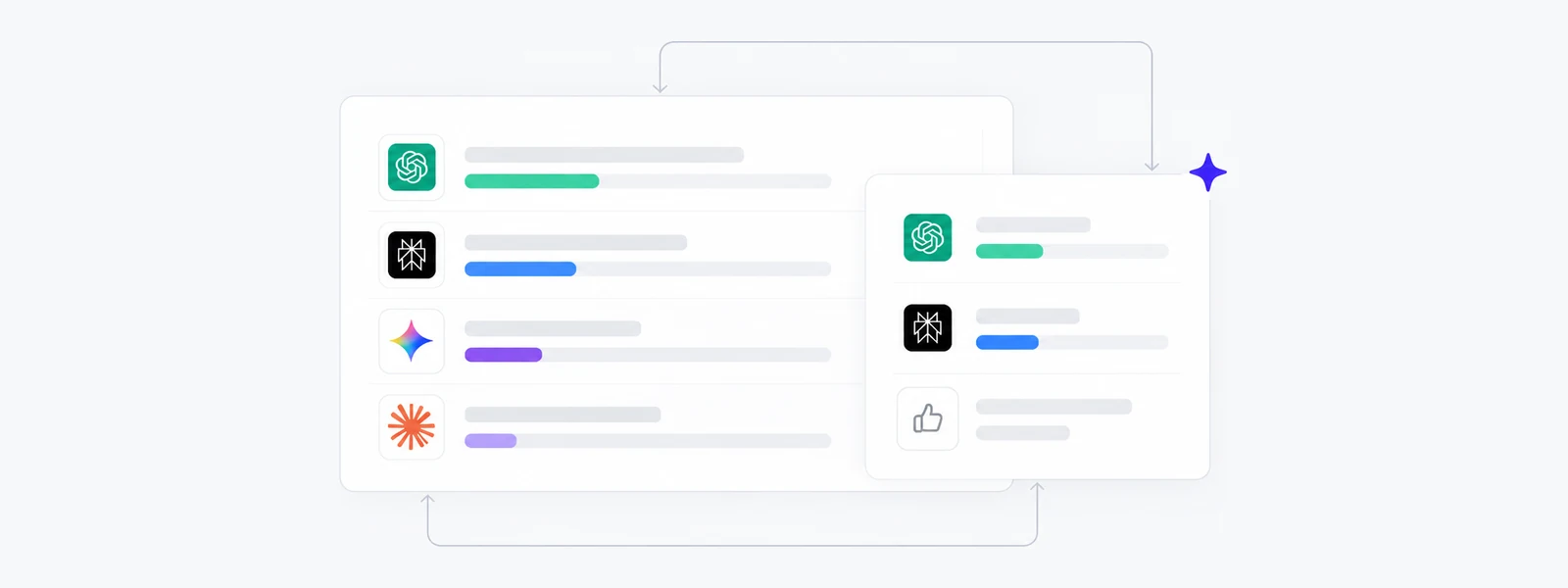
AI Visibility
How often you get named at all, per assistant, with the full answer behind every point on the chart.
See AI visibility -
AI Sources
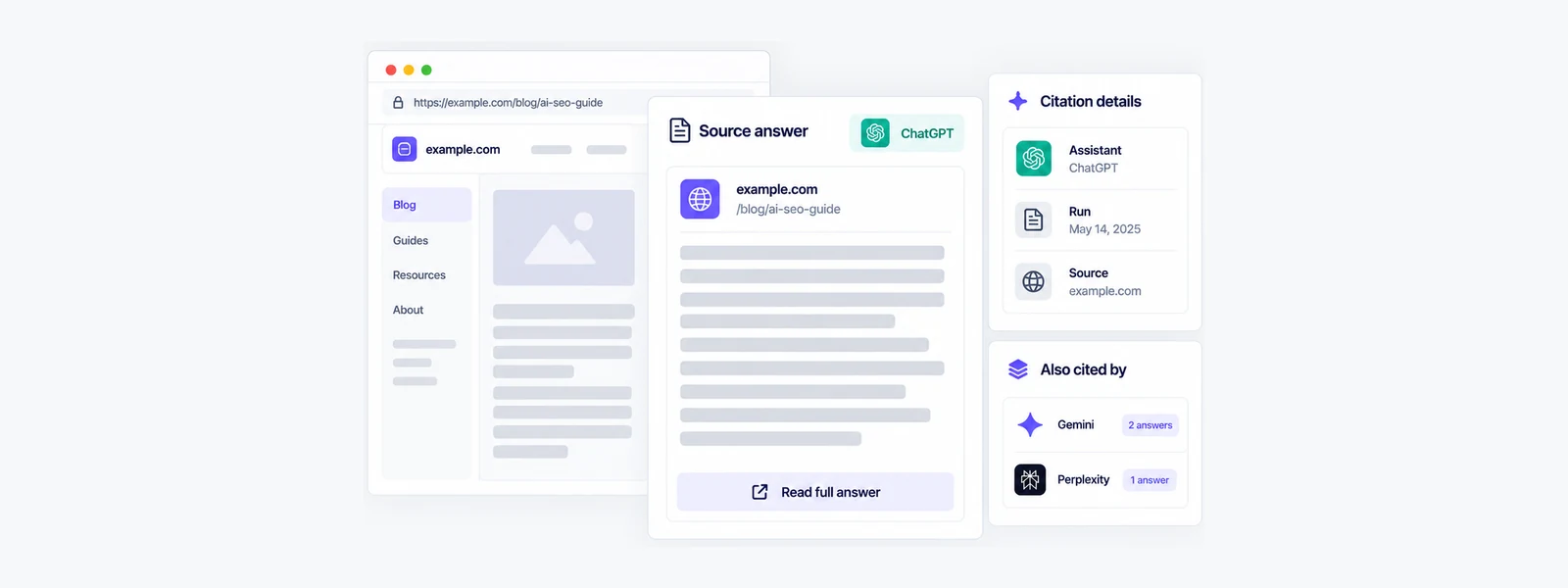
The pages cited in the same answers — usually a listicle, a forum thread or a rival's comparison post. About half are ones you could get onto.
See AI sources -
Growth Opportunities
Every gap comes back as a ranked move naming the page to write or the source to go and earn, cheapest first.
See the action plan
SaaS questions
What product marketers ask before the first reading goes out.
Which questions should we track first? +
You do not have to guess, and the honest answer is that it differs by product. A vector database came back with 37 recommendation-style questions and one about pricing. An AEO tool came back with 35 education questions and one comparison. The mix is read out of your market rather than assumed, and you can strike out any question you disagree with.
How is this different from rank tracking? +
Rank tracking tells you where a page sits in a list of links. This tells you whether a paragraph names your product, which rivals it names beside you, and which pages that same answer cited.
Everyone shows a visibility score out of 100. Where is yours? +
We do not publish one. A single number blends assistants that openly disagree — 13 of 15 on one and 4 of 15 on another, same questions, same day — and it hides the sample it came from. You get a share per assistant with the number of answers beside it.
What if we come back at zero? +
That is common and it is not a verdict. Two of the three software products we ran most recently were at or near zero while the category leader was in most answers. Zero still tells you something useful, because the run also shows which pages those answers were reading.
Do you tell us why AI picked a competitor? +
No, and be careful with anyone who says they do. You get the pages the same answer cited while naming them, which is where the assistant was reading. That is co-occurrence, not cause. Nobody in this field can currently show a controlled link between one page and one recommendation.
Do you score sentiment? +
No. You get whether you were named, where in the answer, on which assistant, and the full text to read yourself. Grading a paragraph as positive or negative is a judgement we would be inventing, and it moves around between runs more than the mention itself does.
Can we track a product we have not launched yet? +
Only partly. The run starts by reading your site to work out the category and the buyer, so you need something published. If a site is up, tracking the category questions before launch is worth doing — it tells you which sources the assistants already trust.
Is there a free way to see our number? +
Run the audit. It puts your product against your category's real questions and shows what comes back, with no card and no call.
See whether AI puts your product on the shortlist
Run the free audit on your category's real buying questions. If your name is missing from the answer, you will see the pages that answer was reading instead.