"Near me" now returns
three names, not a map.
Assistants answer local questions with a short recommendation. We show which of your locations make that list — measured from the city itself on the one engine that can, and marked plainly where it cannot.
Running more than one location? See how questions are picked
- Cities read from your own location pages
- One reading per city, never an average
- Free audit, no card
One line per city, so a strong market never covers for a branch nobody is being told about.
One brand average hides the branch that is losing
Local demand is asked one city at a time. A single company-wide number tells you nothing about the location that never gets named.
- 01
The answer names a competitor two streets away
Assistants pick a handful of local names. Being the bigger brand nationally does not get you into that handful.
- 02
Your best city is covering for your worst
Averaged across forty locations, a branch that is invisible looks like a rounding error until its bookings drop.
- 03
Most "per city" tracking is a city name glued to a prompt
Typing "in Austin" into ChatGPT does not move ChatGPT to Austin. It changes the question and returns a different measurement wearing the same label. Only Google's AI Overviews is genuinely served per location, and we only call that one a city reading.
- 04
Map pack tools cannot see the answer window
You can hold the pack and still be missing from the paragraph a buyer reads before they ever look at a map.
A number per market, and an honest label on it
The same local questions, read from each city on the engine that is actually served there.
Every city read on its own
Each city is asked separately and gets its own line, never rolled into a brand average. Up to eight places per run, one at a time.
The cities come from your own pages
We take the markets your site publishes pages for, not a model's guess. On one run the guess named four cities the business never served.
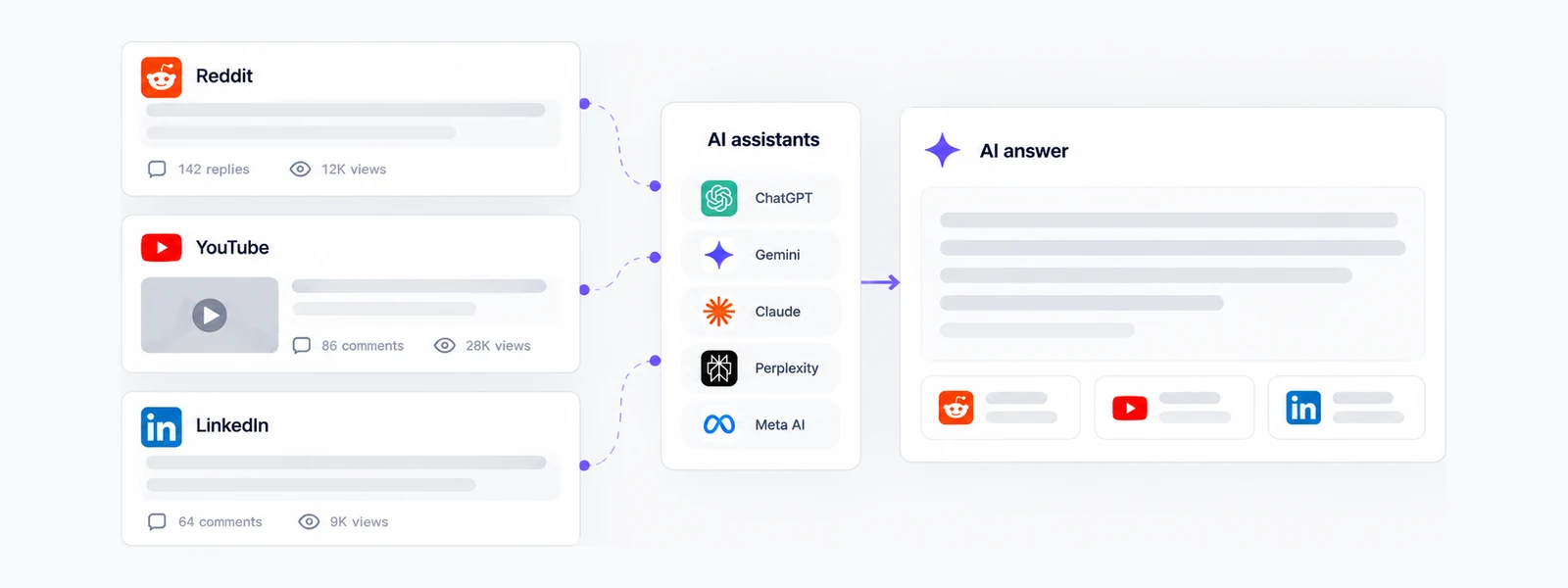
Every gap names what was cited
Usually a directory row, a review page or a city listicle rather than anything on your own site. That is where the assistant was reading.
From forty locations to one ranked list
Four steps between "which branches are invisible" and a short list of fixes.
- 01
We read your site for the markets you serve
Your own location pages decide the list, not a guess. Any place name we cannot resolve is reported back to you, never quietly dropped.
The markets you really serve, in writing
- 02
The local questions get found for you
City questions, "near me" phrasing and whatever is already asked in your market, from Reddit, People Also Ask and the rivals ranking. Sixty tested, five kept.
Real local questions, each with its source
- 03
Each city is read on its own, weekly
One city at a time, on purpose. Fired together they come back none of six, so a faster version would quietly measure nothing at all.
A per-city history, not a brand average
- 04
Work the weakest markets first
Each gap names the listing, review page or article, cheapest first, with the answer that produced it attached to it.
The branches that gain most, done first
The parts a multi-location team uses
Five views. Each answers a different question about the same local buyer.
-
AI Visibility
How often each market gets named, scored per assistant and never blended, with the full answer behind every point.
See AI visibility -
Prompt Discovery
City and "near me" questions asked three times each on a schedule, so you can tell a real drop from a bad night.
See prompt tracking -
Competitor Tracking
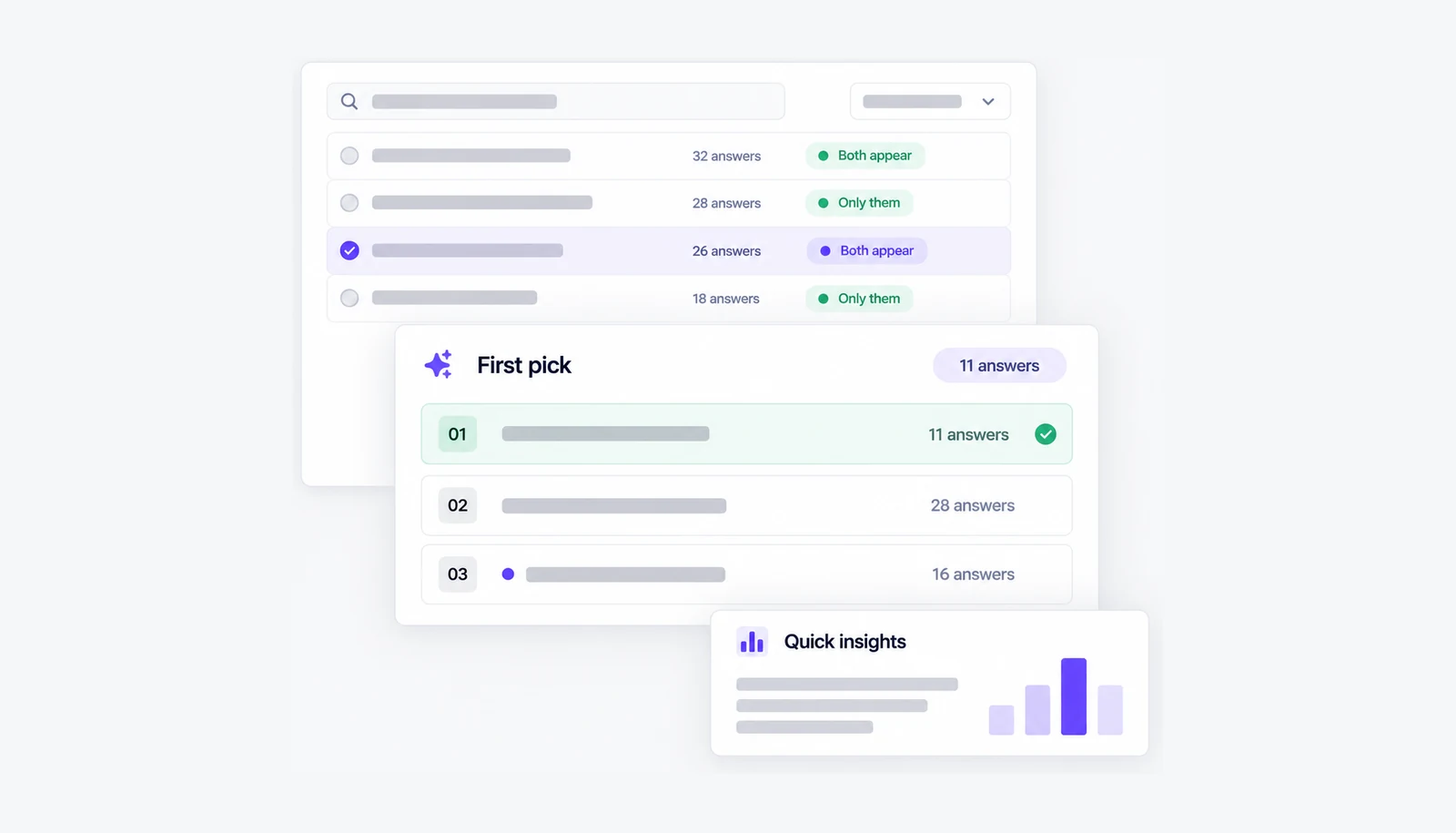
The local names recommended instead of you, market by market. They come out of the answers, not a list you typed.
See competitor tracking -
AI Sources
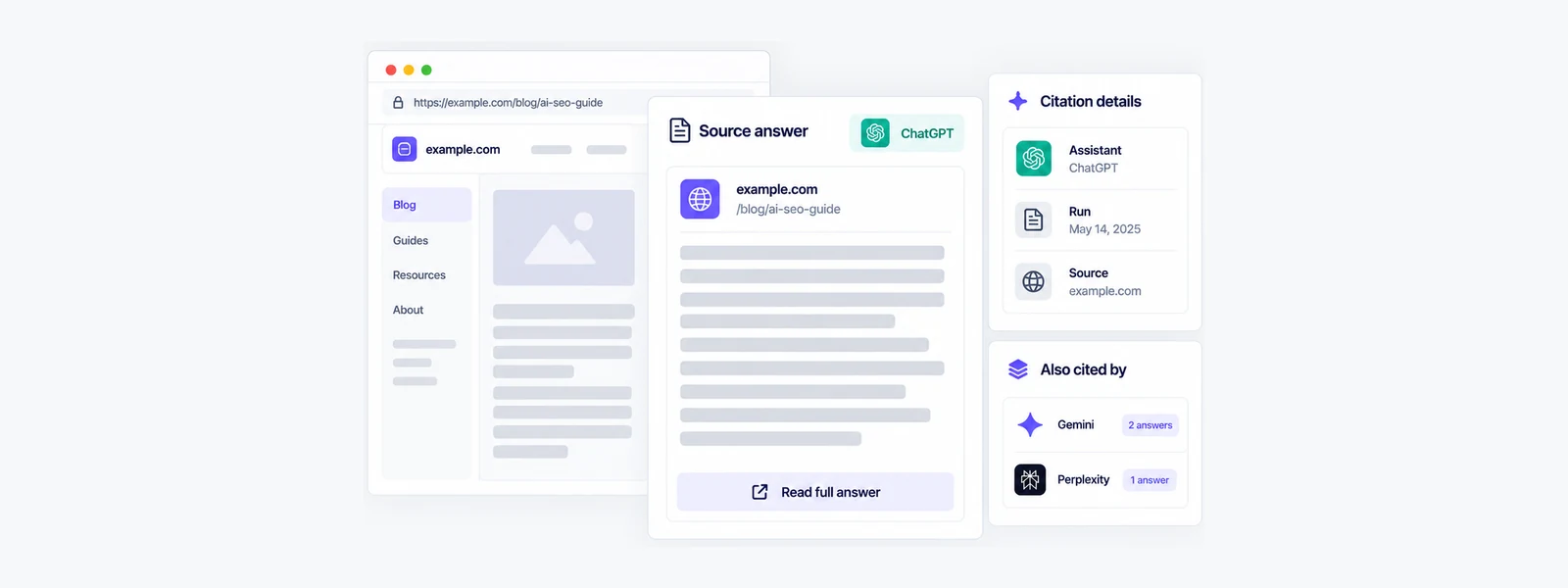
The pages cited alongside a local answer — usually a directory, a review site or a city listicle. About half are ones you could get onto.
See AI sources -
Growth Opportunities
Every gap comes back as a ranked move naming the listing to correct or the page to earn a mention on.
See the action plan
Multi-location questions
The things operators ask before the first market goes in.
Do you score each location separately? +
Yes. Each city is asked its own questions and gets its own line. A brand-wide average is the thing that hides the problem, so we do not lead with one.
Can you really measure ChatGPT city by city? +
Not honestly, and neither can anyone else. ChatGPT, Perplexity and Gemini have no location to set — the common trick is to inject the city into the question, which changes the question rather than the place it is asked from. Google's AI Overviews is served per location by Google itself, so that is the one we report as a city reading. The chat engines are still measured, just not labelled as local.
Where do the cities come from? +
From the markets your own site publishes pages for. A model's guess at your category gets this wrong in a way that matters: on one run it proposed four large metros while the business actually served four smaller cities, one of which was the only place the AI Overview named it at all.
How is this different from map pack or local rank tracking? +
Those tell you where a listing sits on a map. This tells you whether the paragraph above the map names you, which local rivals it names, and which pages that same answer cited.
The answer has our old opening hours. Where did that come from? +
You get every page that answer cited, which is usually where to start looking — a directory row or an aggregator nobody has logged into for years. What we will not claim is which page produced which sentence; the assistants do not report that, and we do not detect whether a page is out of date.
Do franchisees get their own view? +
Not yet. Per-location logins are not shipped. Today a market's numbers and its answers open on a link you can send to the owner, which is how most operators share them.
Can we start with one city? +
That is the usual way in. Run the free audit on a single market, see whether the answer names you, and add the rest once you know what it is telling you.
What if a place name does not resolve? +
It is reported as unresolved rather than dropped. A market we could not map is a hole in the measurement, and a hole that reads as a zero is the worst failure this kind of tool can have.
Find the branches AI never mentions
Run the free audit on one market. If the answer names three local competitors and not you, you will see the pages it was reading.