Your buyers ask an assistant
before they ask you.
Find out how often AI names your brand, which rivals it names instead, and what those answers were reading. Every figure comes with the number of answers behind it, so it survives the first question in a review.
Want to see how a number is built? See AI visibility
- Four assistants, scored apart
- Every answer stored and readable
- Free audit, no card
Your buyers ask an assistant, and nobody counts it
Demand is getting answered before the click. With no number for that, the budget and the calendar are guesswork.
-
Clicks are falling while demand holds steady
The category keeps buying. The answer just got read in place instead of on your site.
-
One screenshot in Slack is not a metric
You cannot trend it, share it, or defend it when the budget review comes around. Ask the same question twice and it often says something different anyway.
-
A number with no denominator gets picked apart
"We're at 34%" invites one question: out of what? Most dashboards cannot answer it. Every figure here prints its sample — 59 answers, 5 questions, four assistants — under the chart.
-
"Write more content" is a guess, not a plan
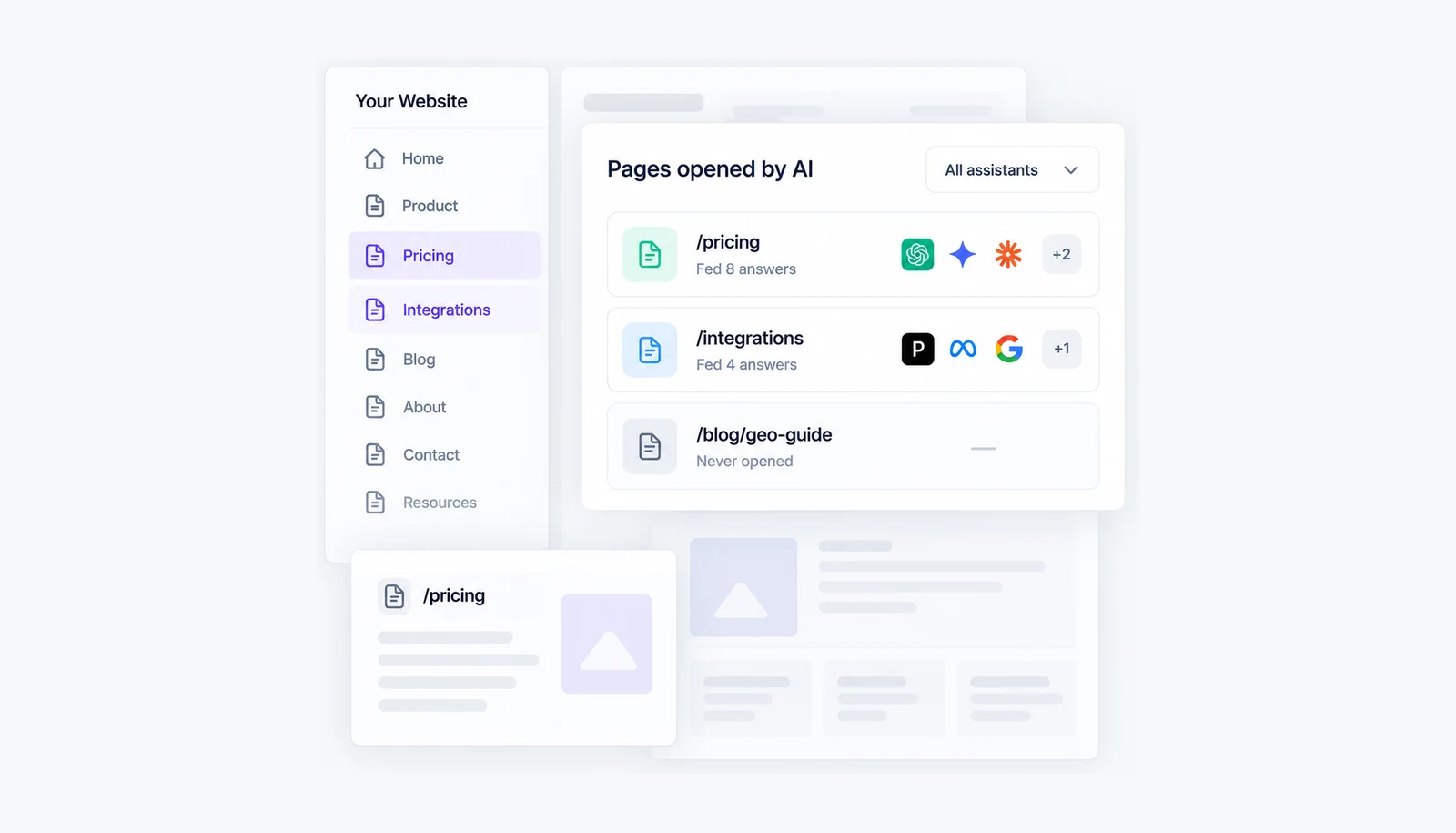
On one run the assistants opened 16 pages of the brand's own site and 8 of those answers still named somebody else. That is a format problem, and more pages would not have fixed it.
A number your leadership can read, and check
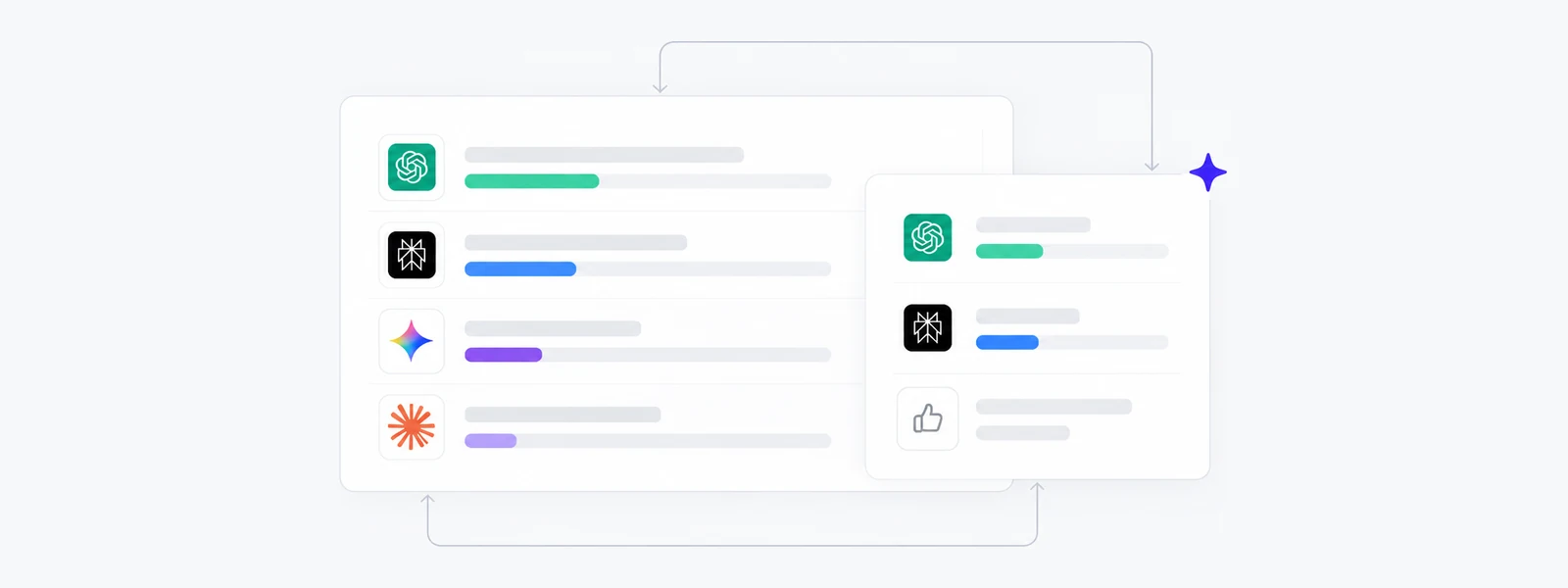
Your share of the answer, per assistant
How often you are named, where you land, and how much of the category is yours. Counted once per answer — a brand named four times in one answer counts once.
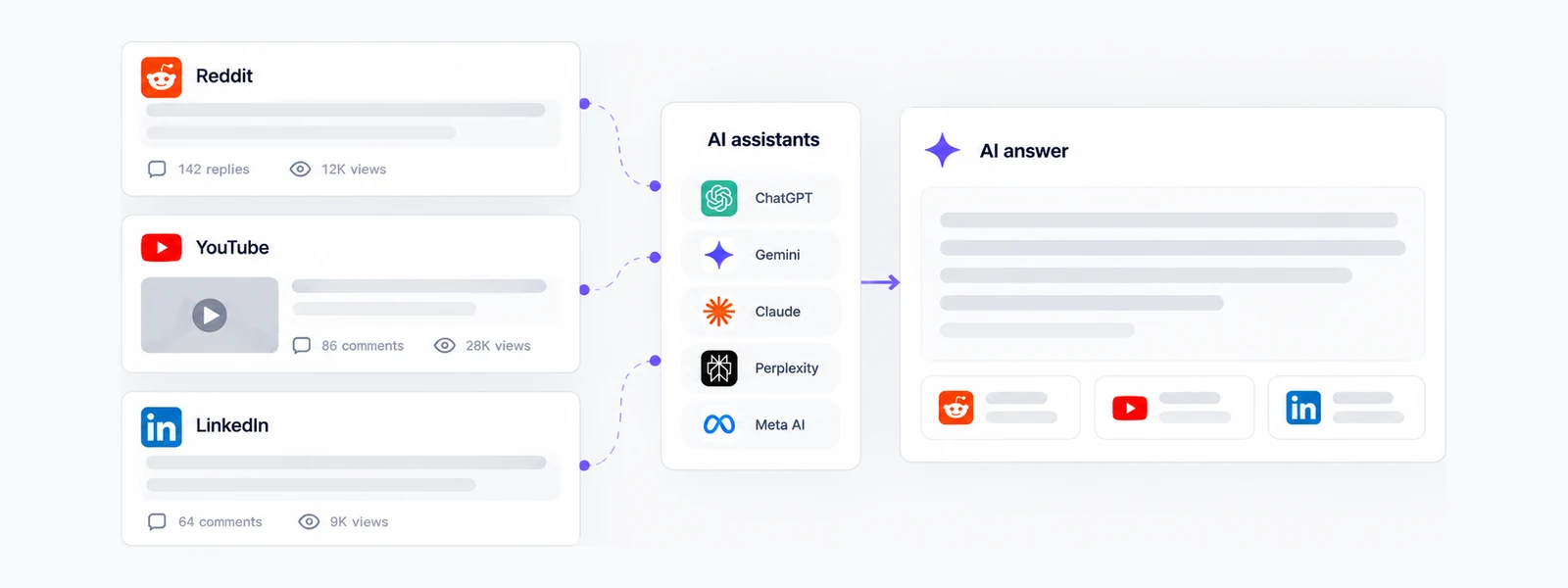
What those answers were reading
Every answer keeps the pages it cited, sorted by who owns them. On one run 47% of the source pool was a rival's own site; the rest was open to publish on.
The content plan has a reason
Each gap becomes one move, cheapest first, with the answer that produced it attached so the calendar is arguable rather than asserted.
From first run to first move
Four steps from a domain to a ranked backlog your team can start on.
-
The buyer questions get found for you
From Reddit threads, People Also Ask, search volume and the rivals already ranking — not your keyword list. Each question keeps the line it came from, so you can argue with it.
A question set that matches real buying questions
Step 01
-
The rival names come out of the answers
You do not type a competitor list. The brands scored beside you are the ones the assistants actually named, which is how a name you were not tracking turns up in the report.
Share of voice against who is really there
Step 02
-
Read the full answers back
Every run keeps the whole answer, its engine, its run number and every page it cited. About 4,400 characters each, nothing summarised away.
Evidence under every number you present
Step 03
-
Work the plan it ranks for you
Take the ranked moves into the calendar. The same locked questions go out weekly, so the next reading measures the same thing.
A ranked backlog the team can start on Monday
Step 04
The parts a marketing team lives in
-
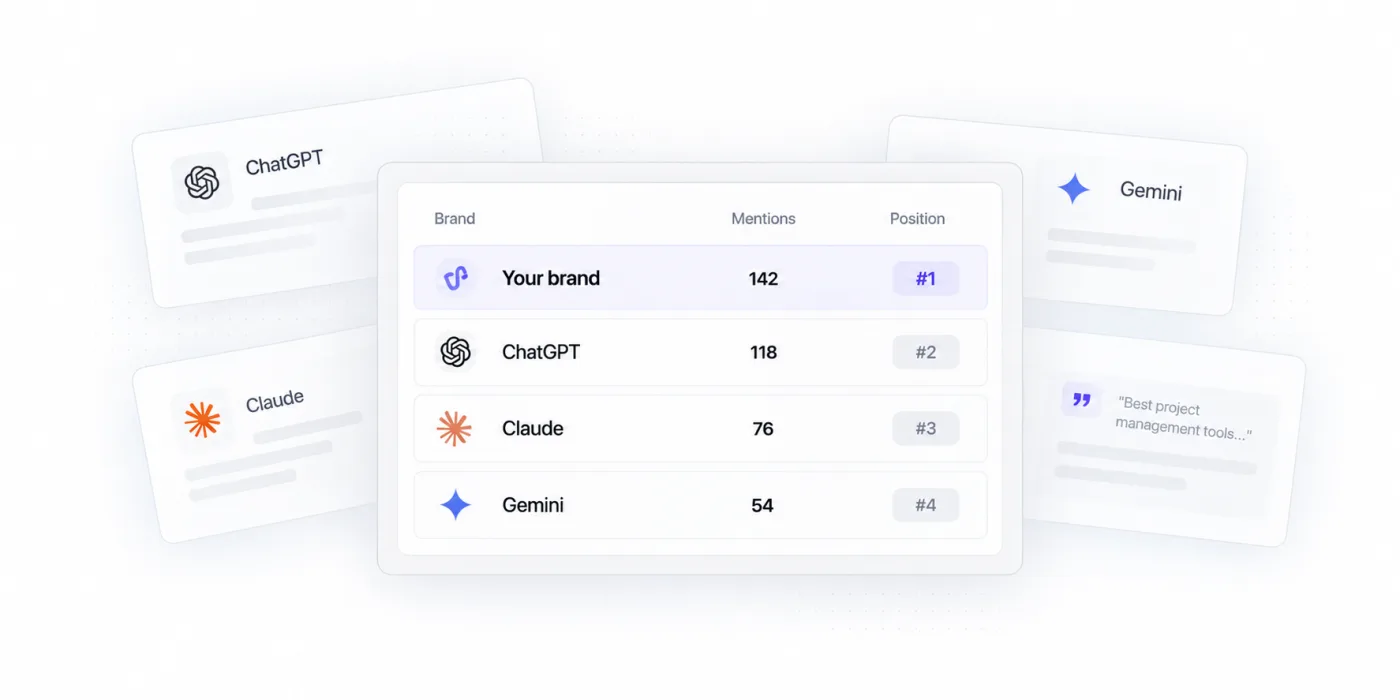
Competitor Tracking
Share of voice against the brands the answers actually named, on your own question set rather than a generic list or one you typed.
-
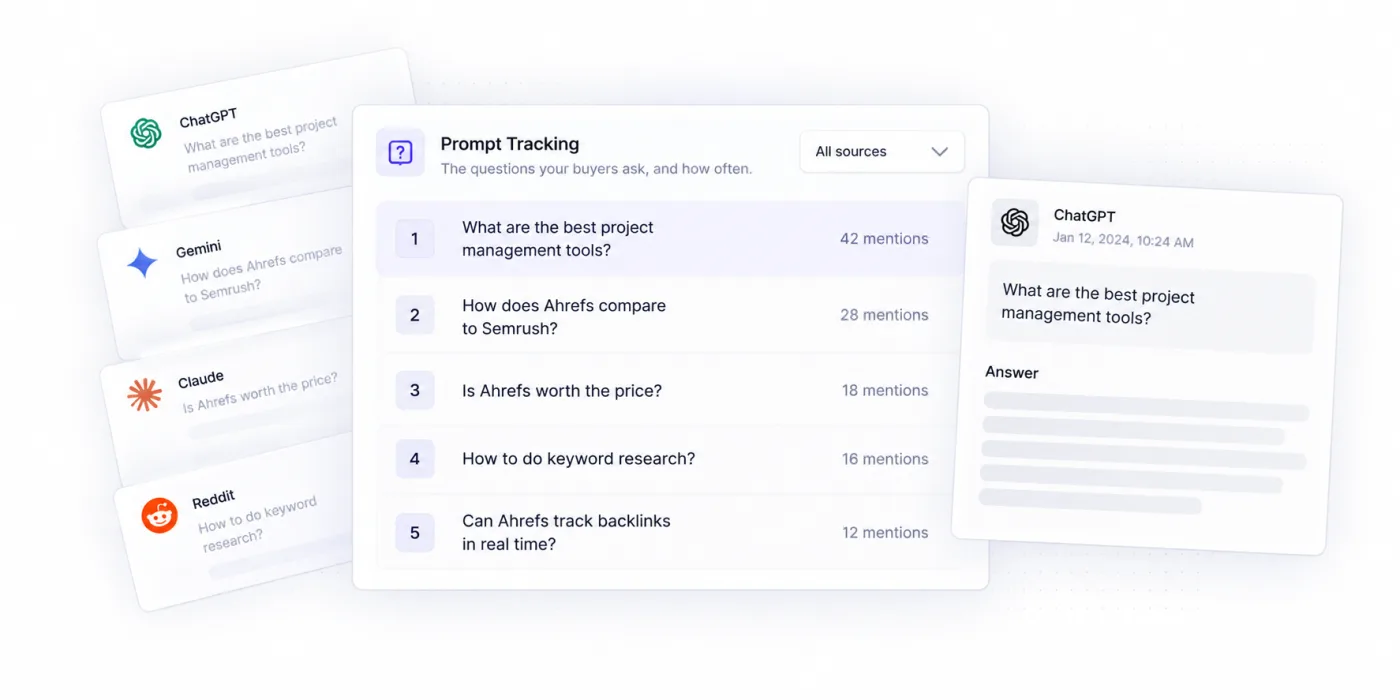
Prompt Discovery
Your buyers' real questions, asked three times each on every assistant, with each answer kept for the record.
-
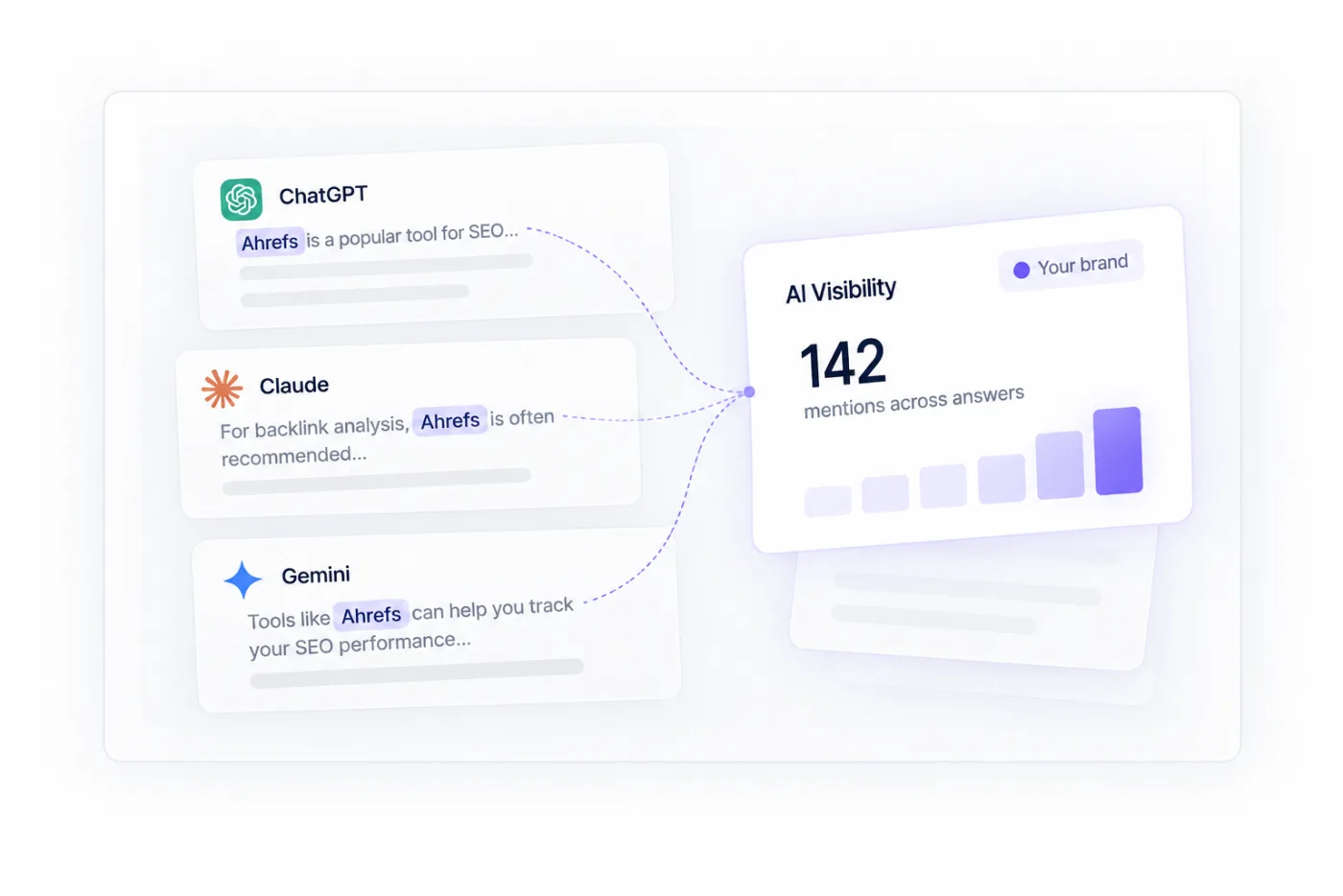
AI Visibility
How often you get named across four assistants, where you land when named, and the sample size printed beside every figure.
-
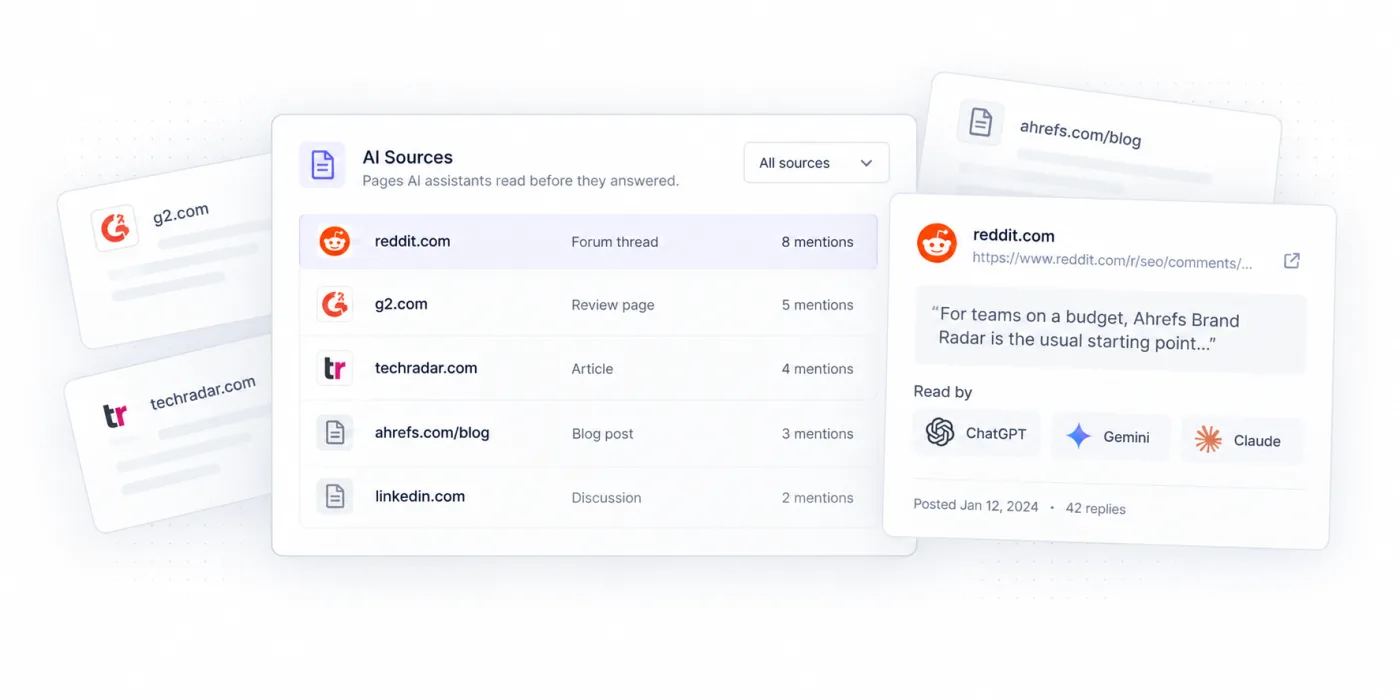
AI Sources
The pages cited in the same answers, sorted by whether you could ever publish there. It is where the assistant was reading, not proof of why it chose anyone.
-
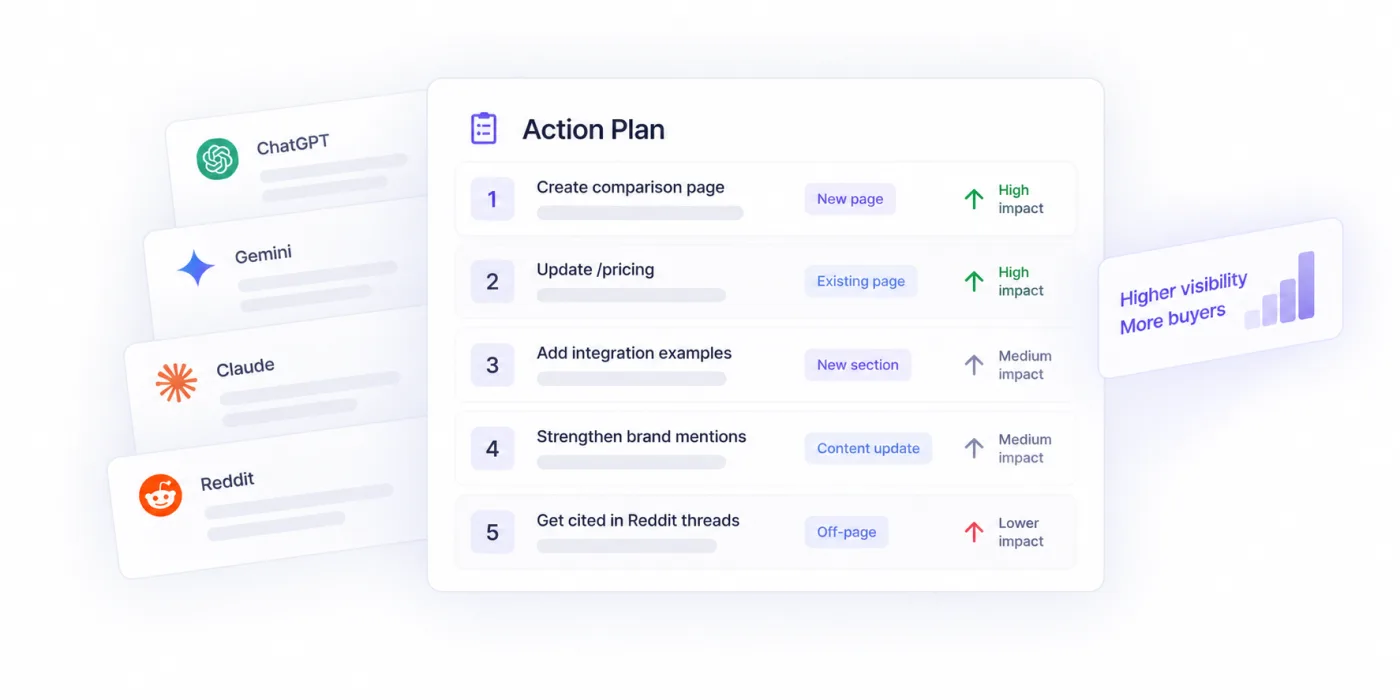
Growth Opportunities
Each gap turned into one ranked move, sized so it drops straight into the content calendar.
Marketing team questions
What usually gets asked before the first run.
Which assistants do you check? +
ChatGPT, Perplexity, Gemini and Google's AI Overviews, each scored on its own. On one run the same five questions named a brand in 13 of 15 Gemini answers and 4 of 15 on Perplexity — one blended number would have hidden both.
What exactly can I put in the deck? +
A share per assistant, the rivals named beside you, the pages those answers cited, and the sample line that goes under it: "59 answers — 5 questions across four assistants. Every percentage is answers out of those 59, counted once per answer." The denominator is on the slide, not in a footnote.
Can you tell us why a competitor got recommended? +
No, and this is where we differ from most of the category. You get the pages that same answer cited, which is where the assistant was reading. Calling that the reason it chose them is a step nobody in this field can currently support with a controlled test.
Do you tie AI mentions to revenue? +
Not today. An assistant referral usually lands in analytics as direct or referral, and joining it to a mention weeks earlier is a claim, not a measurement. We would rather give you a defensible visibility number than an attribution model that falls apart under questioning.
Do I have to pick the questions myself? +
No. Sixty are tested against the assistants and five are kept, each shown with where it came from and why the others were dropped. If one is wrong you can have it struck, and the correction is stored against your domain so it survives every future run rather than being redone each time.
How often does it run? +
Weekly by default. The scheduler checks every six hours for a domain whose last reading has passed seven days. More often is possible and it is a cost decision, since three runs across four assistants is twelve answers per question.
How is this different from a rank tracker? +
A rank tracker tells you where a link sits. This tells you whether your brand is named in the answer at all, in what position, which rivals are named beside you, and what that answer cited. You can rank first on Google and be absent from the answer built on top of it.
Can I see the actual answer, not just the score? +
Every point on every chart opens the full answer and its sources, on a link you can send to anyone. A score you cannot audit is a score you should not present.
Does anyone else see our data? +
No. Your questions, answers and the brands found in them are held against your domain and are never pooled into anyone else's numbers or into a shared benchmark.
See what AI says about you this week
Run the free audit on your own brand. You get the share per assistant, the rivals named instead, and the sample line that makes it presentable.