Your reporting is in the answer.
Your name might not be.
Assistants summarise the work and move on. We show which of your pages get cited, which outlet gets named as the source, and how often each engine shows its sources at all — measured, not assumed.
Want to see one beat first? See what gets cited
- Cited and named counted apart
- Every cited page kept, with its title
- Free audit, no card
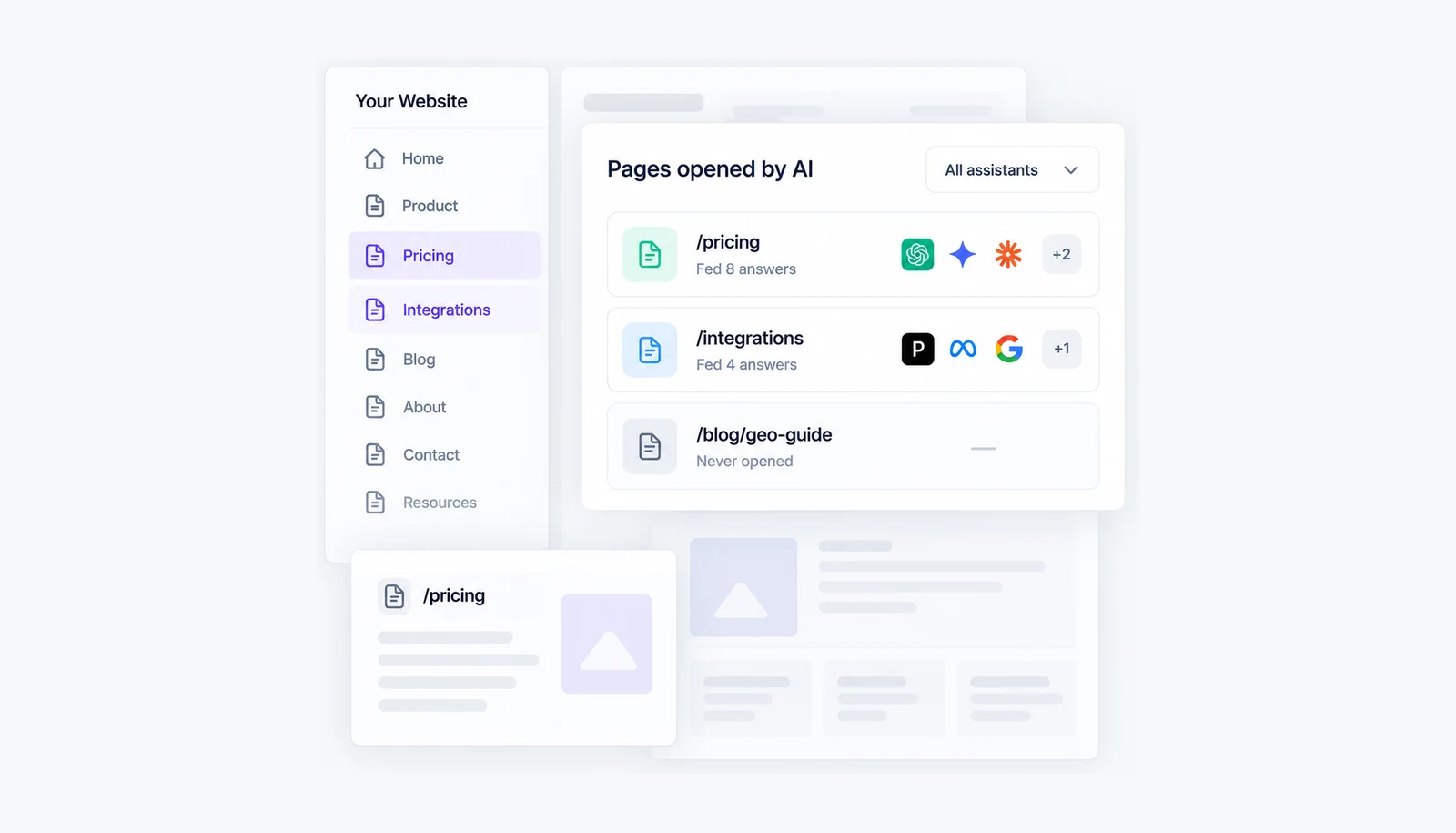
Which of your pages get cited, and which outlet gets named when the answer is built on your work.
The work gets used and the traffic does not arrive
A summarised answer ends the session. Without knowing which pages are being read, you cannot argue the value of the desk that wrote them.
- 01
Cited is not the same as named
Your page can be one of the sources an answer was built from while a rival outlet is the name in the sentence. We count those two separately, because they are two different losses and they need different work.
- 02
Sessions fall and nobody can say why
The referrer is gone, so a real drop in reach looks identical to a bad month of search luck.
- 03
Not every engine shows its sources
Across 2,200 answers we collected recently, Perplexity cited sources in every one and Google's AI Overviews in 98%. Gemini managed 84% and ChatGPT only 59%. A tool that reports one citation number for all four is averaging over that.
- 04
You cannot prove authority to an advertiser
"We are the source AI quotes on this beat" is a strong sell, and until now there was no number behind it.
Proof that the work is the source
The same beat questions, re-run on a schedule, with each cited page recorded.
Citations recorded page by page
Not a site score. The cited domain is resolved to the exact article and its title, so the desk that earned it can be told about it.
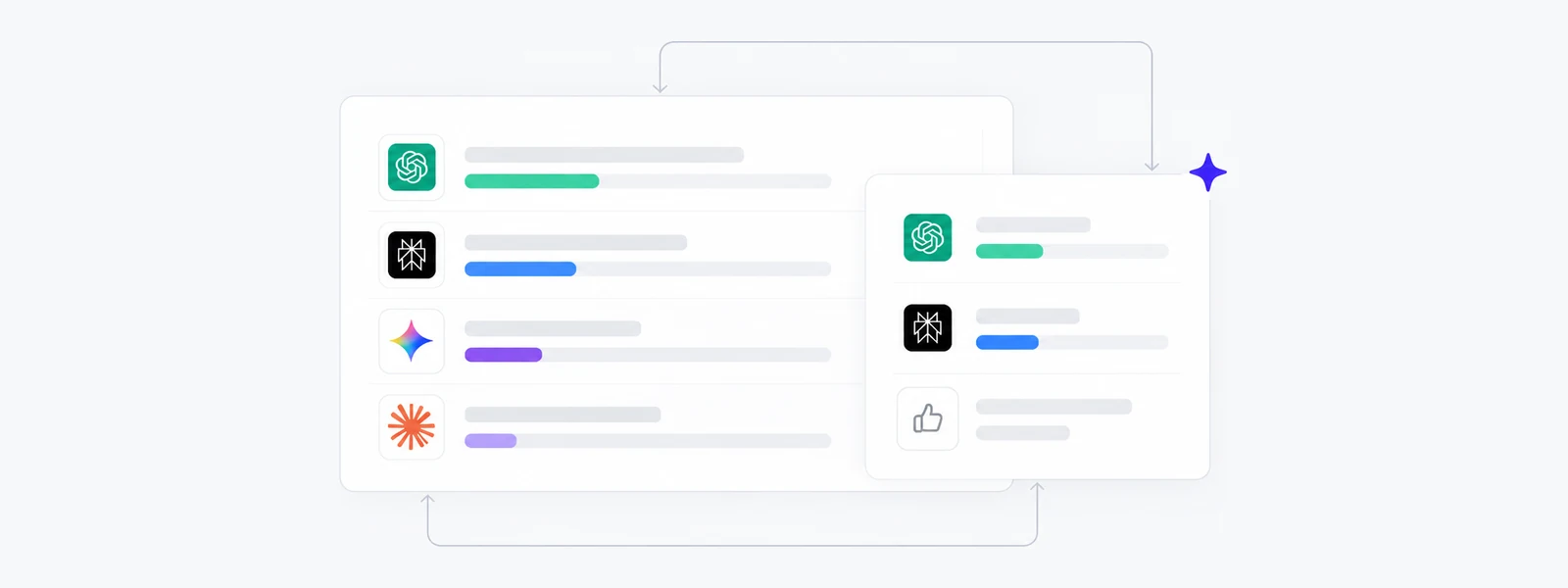
Every assistant scored on its own
They differ enormously. Perplexity carries about fifteen sources per answer and AI Overviews about seven, so one absence is not the other.
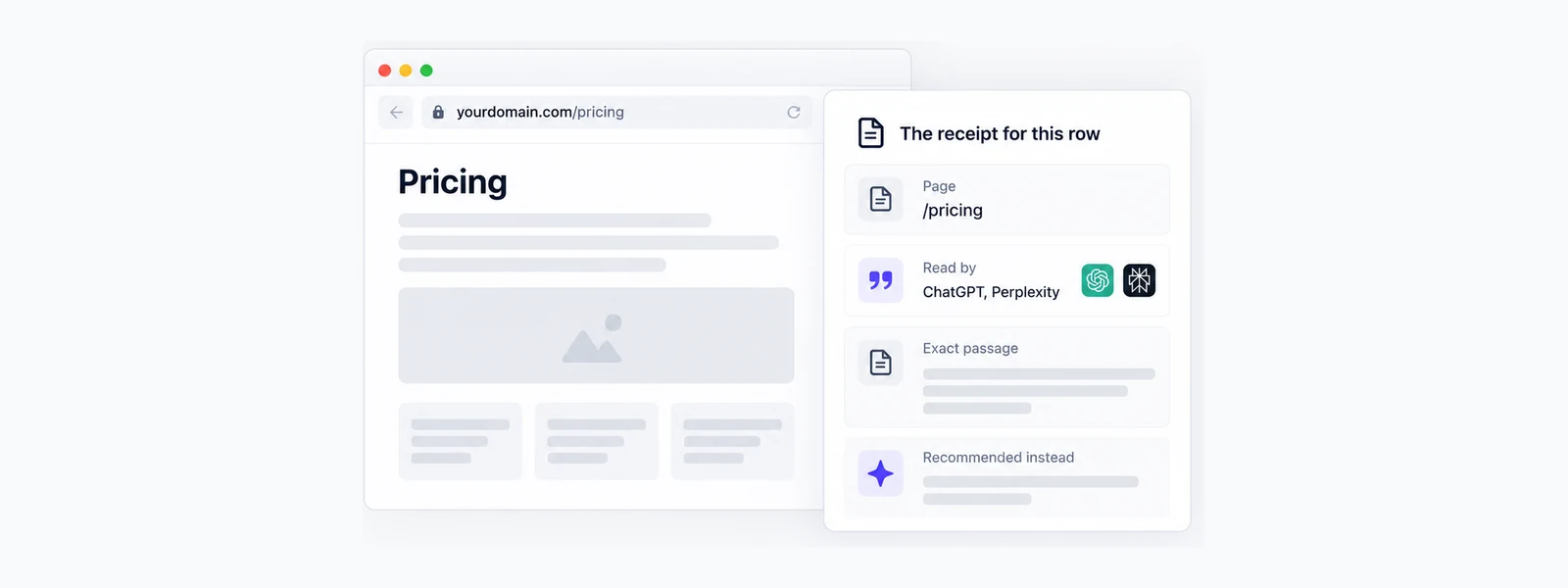
A fall in reach you can see
Every question is asked three times per assistant and every answer is kept, so a change is something you read rather than something inferred.
From a beat to a citation record
Four steps between "is our reporting being used" and a record of which pages carry the answers.
- 01
We read your site and find the beat
The subjects you cover and the outlets you are measured against both come out of the run. You never type a list of rival titles.
A scoreboard built from the answers, not a guess
- 02
The reader questions get found for you
What readers ask an assistant about your subjects, from Reddit, People Also Ask and whoever already ranks. Sixty tested, five kept, each with its line.
The questions your readers ask elsewhere
- 03
Track who gets cited, weekly
Five questions, four assistants, three runs each. Every cited domain is kept, resolved to the article, and sorted by who owns it.
A citation record, page by page
- 04
Feed it back to the desk
Each gap names the article to update or the explainer worth commissioning, with the answer that produced it attached.
Commissions grounded in what gets cited
The parts a newsroom uses
Five views. Each answers a different question about the same reader.
-
AI Sources
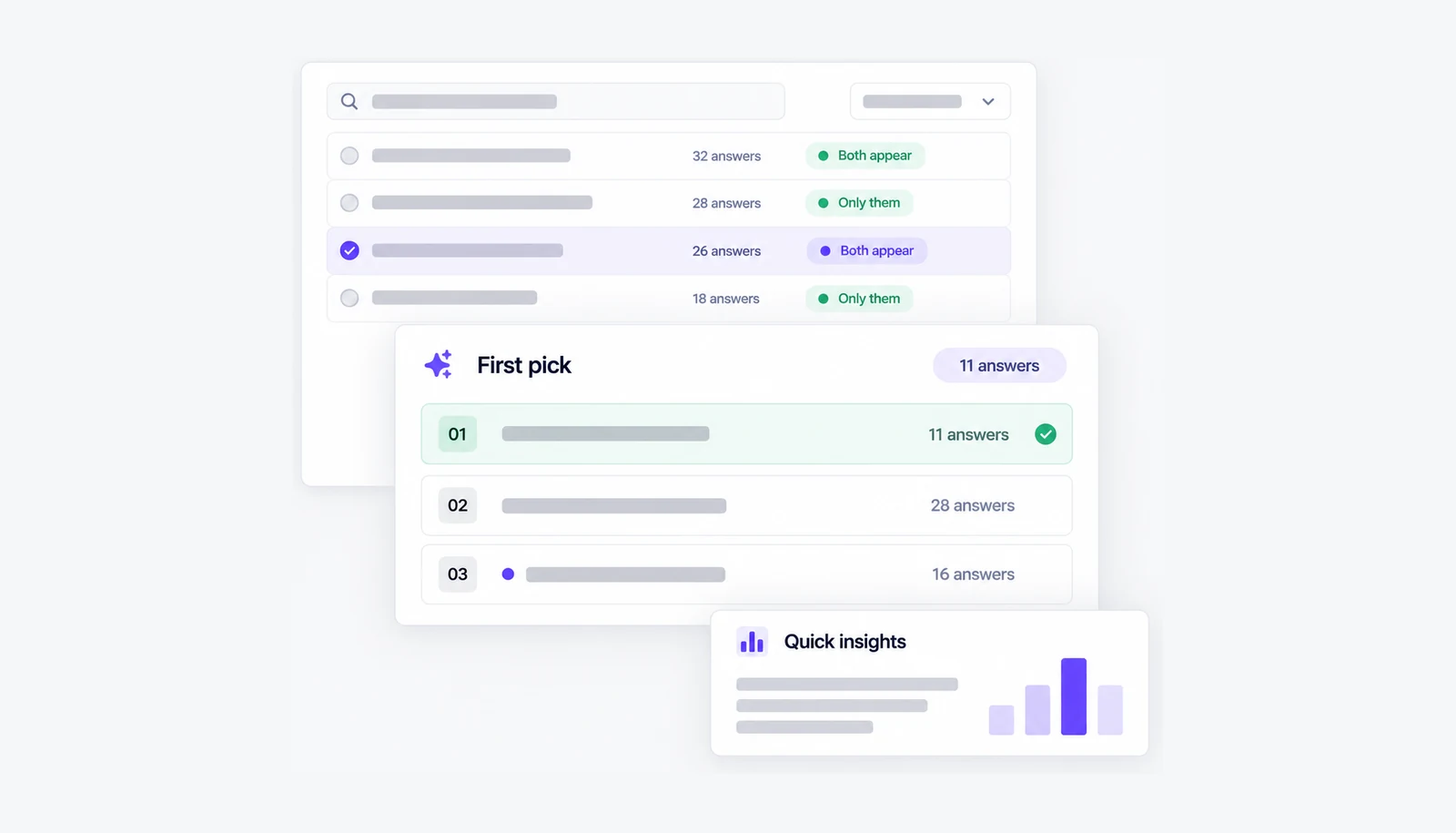
Every page cited alongside an answer, resolved to the article and its title, and sorted by who owns it — yours, a rival's, or ground anyone can reach.
See AI sources -
AI Visibility
How often your outlet is named on your beat, per assistant, counted separately from how often you are merely cited.
See AI visibility -
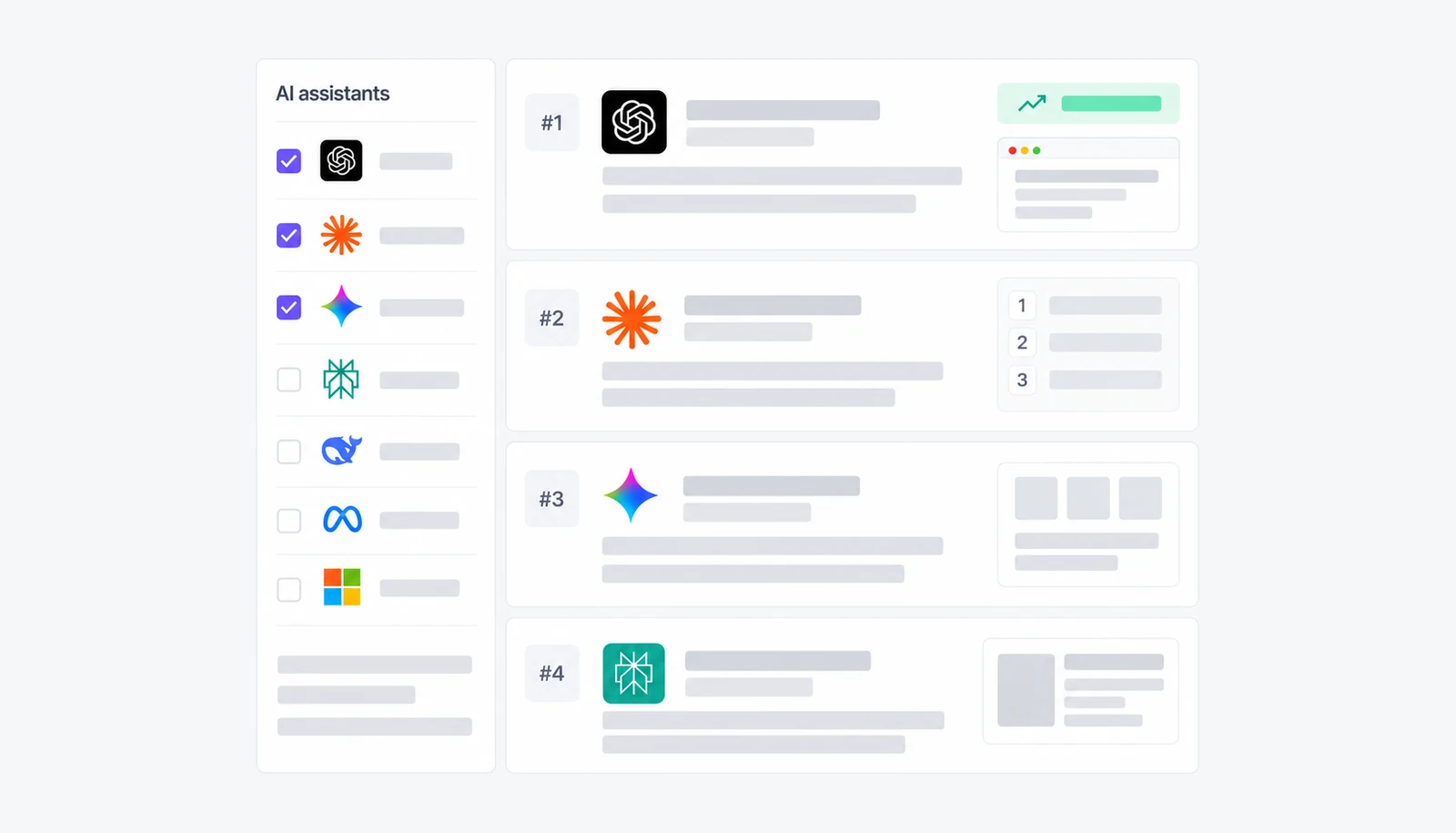
Prompt Discovery
The questions readers ask about your subjects, asked three times each on a schedule so a fall in reach is real and not a bad night.
See prompt tracking -
Competitor Tracking
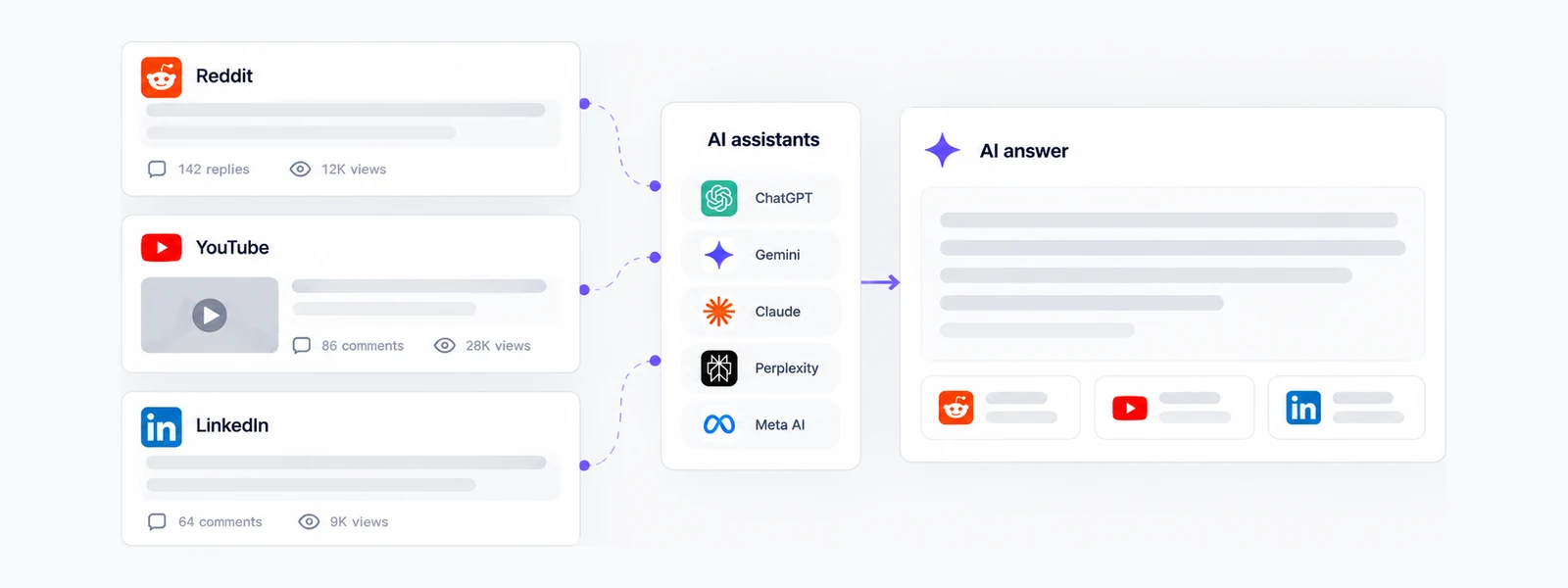
Which rival outlets get named instead of you on the same questions in the same week. Read out of the answers, not from a list you supplied.
See competitor tracking -
Growth Opportunities
Every gap comes back as a ranked move naming the article to update or the explainer worth commissioning.
See the action plan
Publisher questions
The things editors and audience teams ask before the first beat goes in.
Can you tell us which article was used, or only that we were mentioned? +
Both, where the assistant shows its work. Citations are recorded as returned and resolved to the exact article and title where the answer allows it. Where an engine names your outlet with no link, we record that as a mention rather than pretending it was a citation.
Which engines actually cite sources? +
We measured it rather than assuming. Across roughly 2,200 recent answers: Perplexity cited in 100% and carried about fifteen sources each, AI Overviews 98% with about seven, Gemini 84%, and ChatGPT 59%. So an absence on ChatGPT often means the engine showed nobody, while an absence on Perplexity means you were genuinely passed over.
Does this replace our referral analytics? +
No, it covers what analytics cannot see. A summarised answer leaves no referrer at all, so this is the only record that the reading happened. It does not tie a citation to revenue, and we would not trust a tool that claimed it did.
Do you read our server logs to see AI crawlers? +
No. Some tools separate crawls for training from crawls that serve an answer by reading your logs, and that is a genuinely different job from this one. We measure the answers themselves: what was said, who was named, and what was cited.
Can we track by section or desk? +
Partly. Questions are grouped by topic and each topic reports on its own, so a beat with its own subject matter separates naturally. What is not shipped is a desk you define yourself and assign questions to.
How should an editor use it? +
Two ways. Update the pages that already get cited, and commission on the beat questions where a rival outlet is currently the source. The run tells you which is which.
Is it useful for the commercial team? +
It is often the first thing they take. "We are the outlet AI cites on this subject" becomes a real authority claim once there is a tracked number with its sample printed beside it.
Is there a free way to test it? +
Run the audit on one beat. It shows which outlets get named on those questions and whether any of your pages are among the sources.
See who gets credited for your reporting
Run the free audit on one beat. If an assistant is answering with your work and naming someone else, you will see both the answer and the pages it cited.