The committee researches you
long before the first call.
Several people look you up in private, most of them through an assistant. What the answer says decides whether the meeting gets booked. You never see it happen.
Want to see who AI picks instead? See competitor tracking
- Two buyer roles, scored apart
- Every answer kept and readable
- Free to start, no card
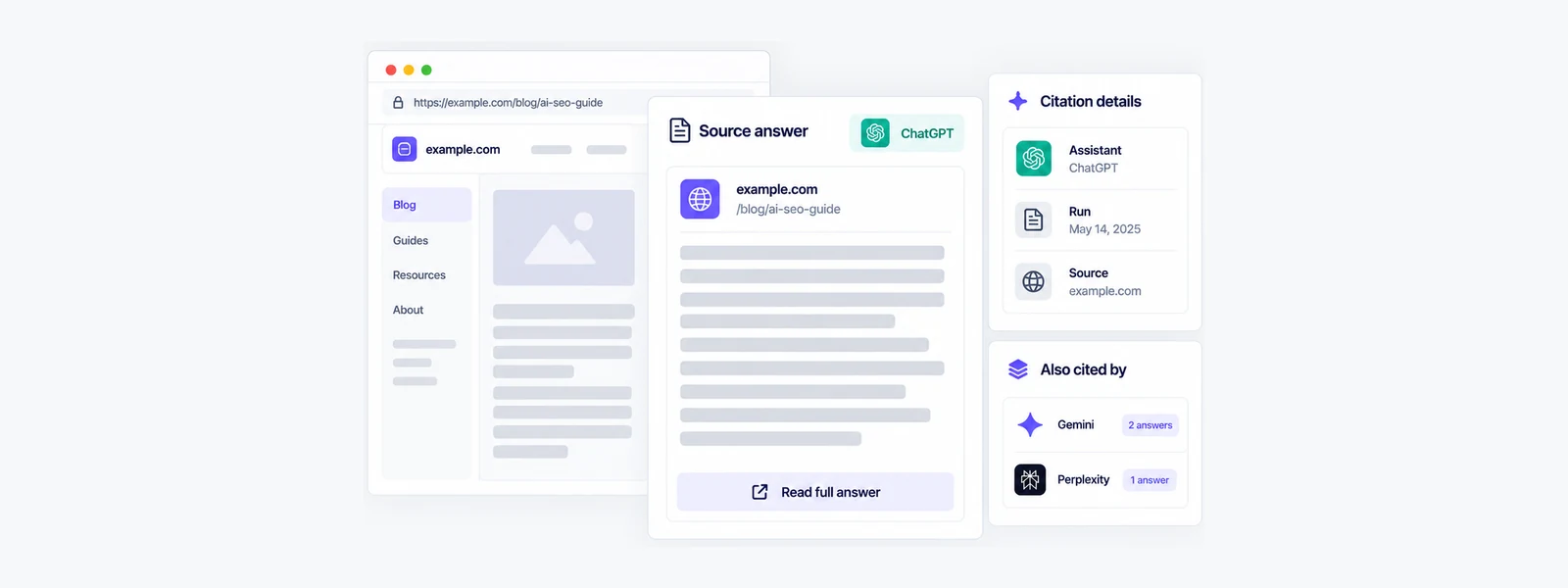
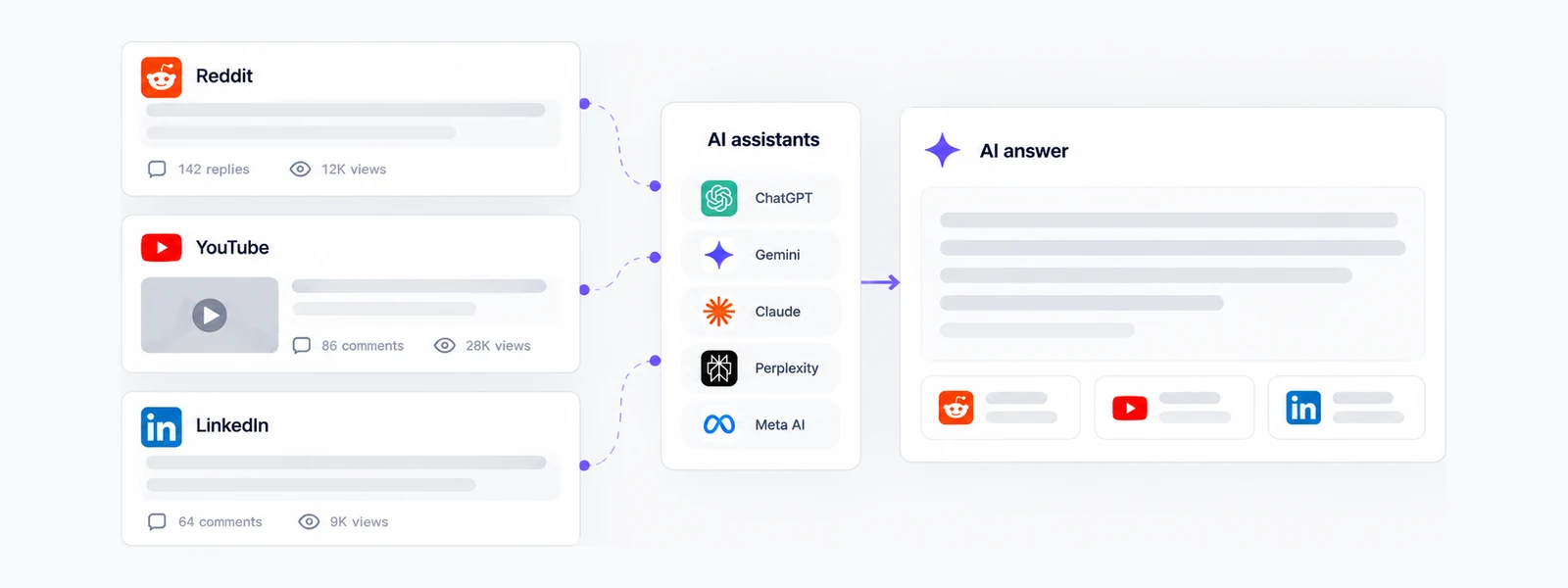
The pages an assistant reads before it describes you — and which of them you do not control.
Nobody tells you what the answer said
A long sales cycle now starts with a private question. No form, no session, no way to know it happened.
- 01
The committee is not one person
A supply chain head and a COO ask different questions about the same vendor. One number for both hides which of them you are losing.
- 02
You cannot see what was said
Analytics shows nothing until somebody finally fills a form. By then the answer has already been read, and you never saw it.
- 03
You are grouped with the wrong vendors
Assistants name whoever the page they read named. Being listed beside the wrong three companies reframes the whole deal.
- 04
One check is not a number
Ask the same question twice and the brands change. Two runs match less than once in a hundred, so a screenshot proves nothing to a board.
One line you can defend
The same vendor questions, re-run on a schedule, with the full answer kept behind every point.
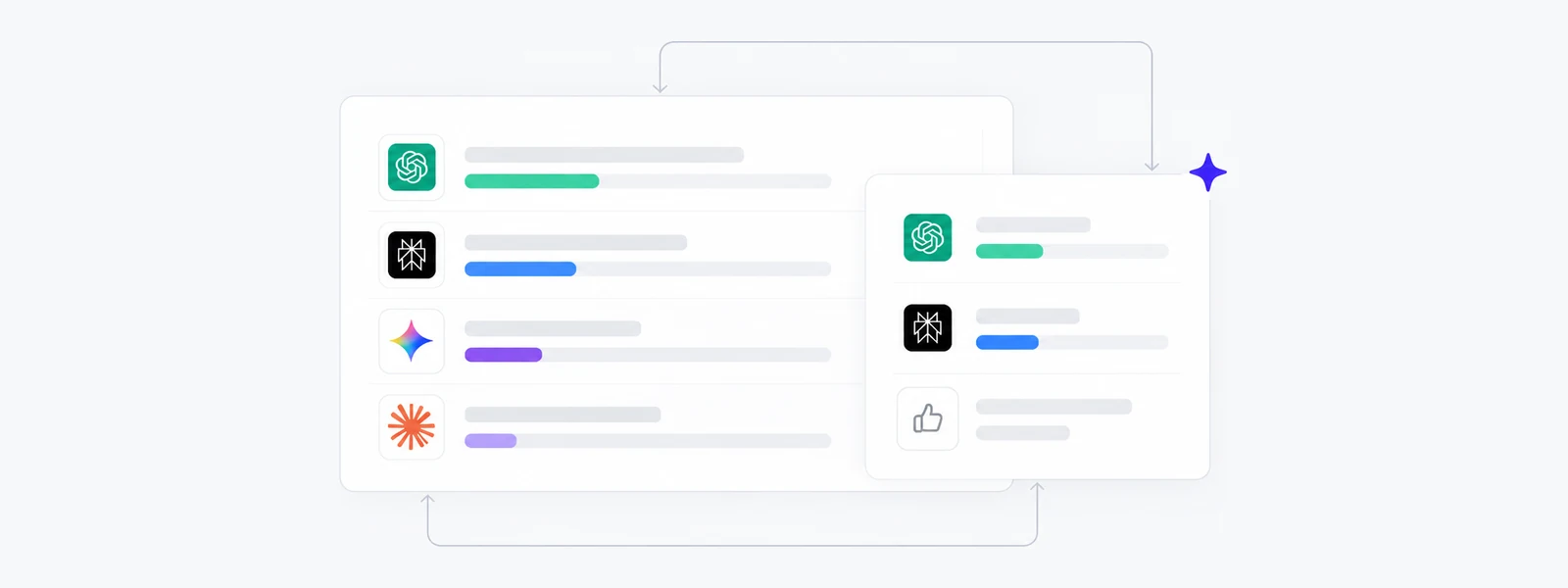
Each assistant scored on its own
On one real run a brand sat at 31% on Google AI Overviews and 0% on ChatGPT, same questions, same day. One blended number hides both.
The pages that answer read
Every source cited in the same answer, sorted by who owns it. About half are pages you could get onto. A rival's own site never is.
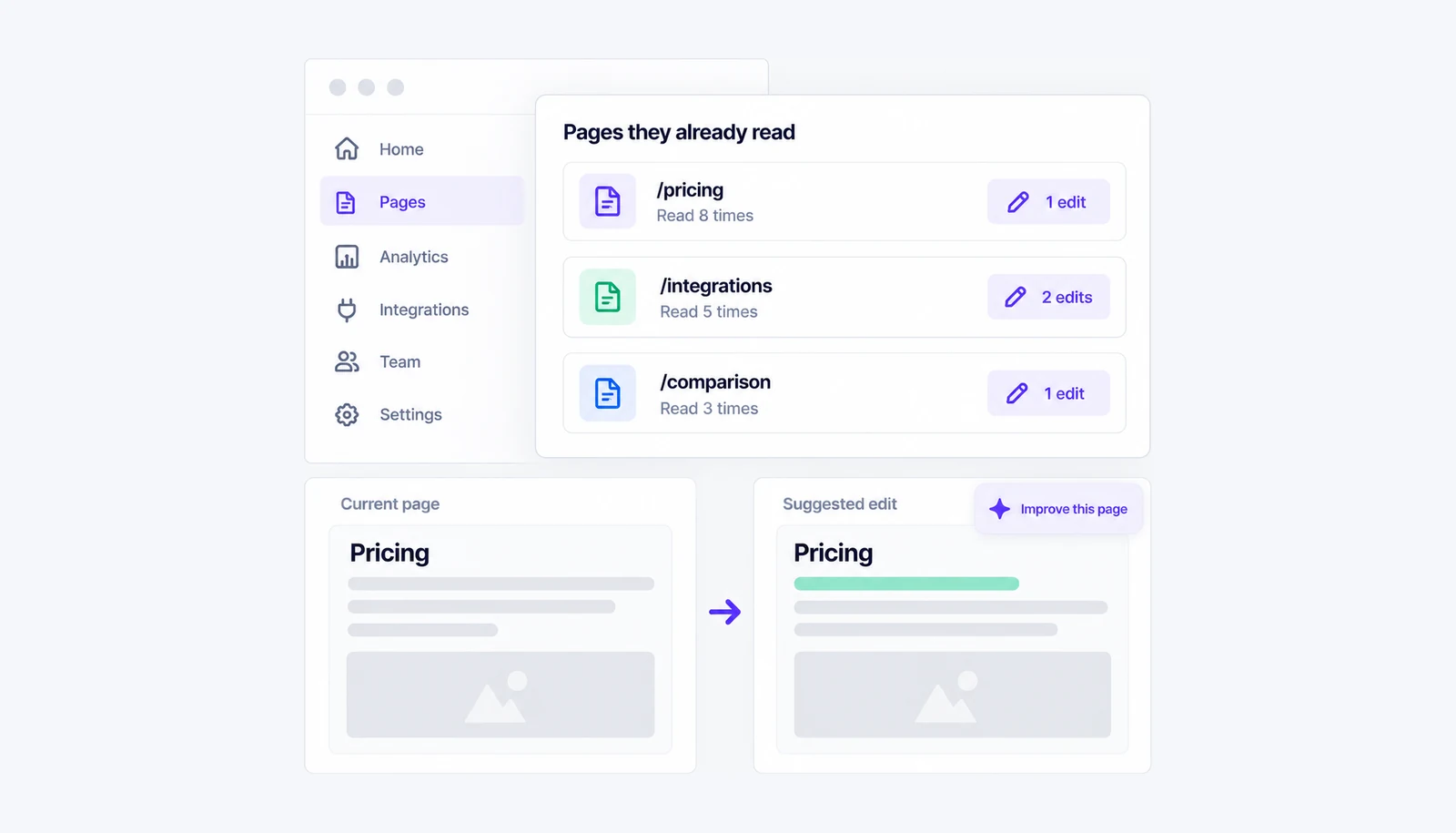
A short list of what to fix
Each gap names the page to edit or the thread to answer, cheapest first, with the answer that proves it attached to it.
From an unanswerable question to a number you can report
Four steps between “is AI recommending us” and a slide for the quarterly.
- 01
We read your site and find the buyers
Two roles come out of it, each with what they are trying to do. For one logistics brand that was a supply chain head and a COO. You can correct either.
The two people who actually decide, named
- 02
We find the questions they ask
From Reddit threads, People Also Ask and the rivals already ranking. 49 tested, 26 pass, 5 kept, each tagged by role and by what it is for.
Real questions, each with a source you can open
- 03
It runs every week
Five questions, four assistants, three runs each. Sixty answers a reading, all saved with the date they were collected.
A line, not a screenshot
- 04
Fix what the answer was reading
Each gap names a page or a thread. The same questions run again afterwards, so you see whether the number actually moved.
A short list of pages that change the answer
The parts a B2B team uses
Five tabs. Each answers a different question about the same buying committee.
-
AI Visibility
How often you get named, scored per assistant, with the full answer behind every point.
See AI visibility -
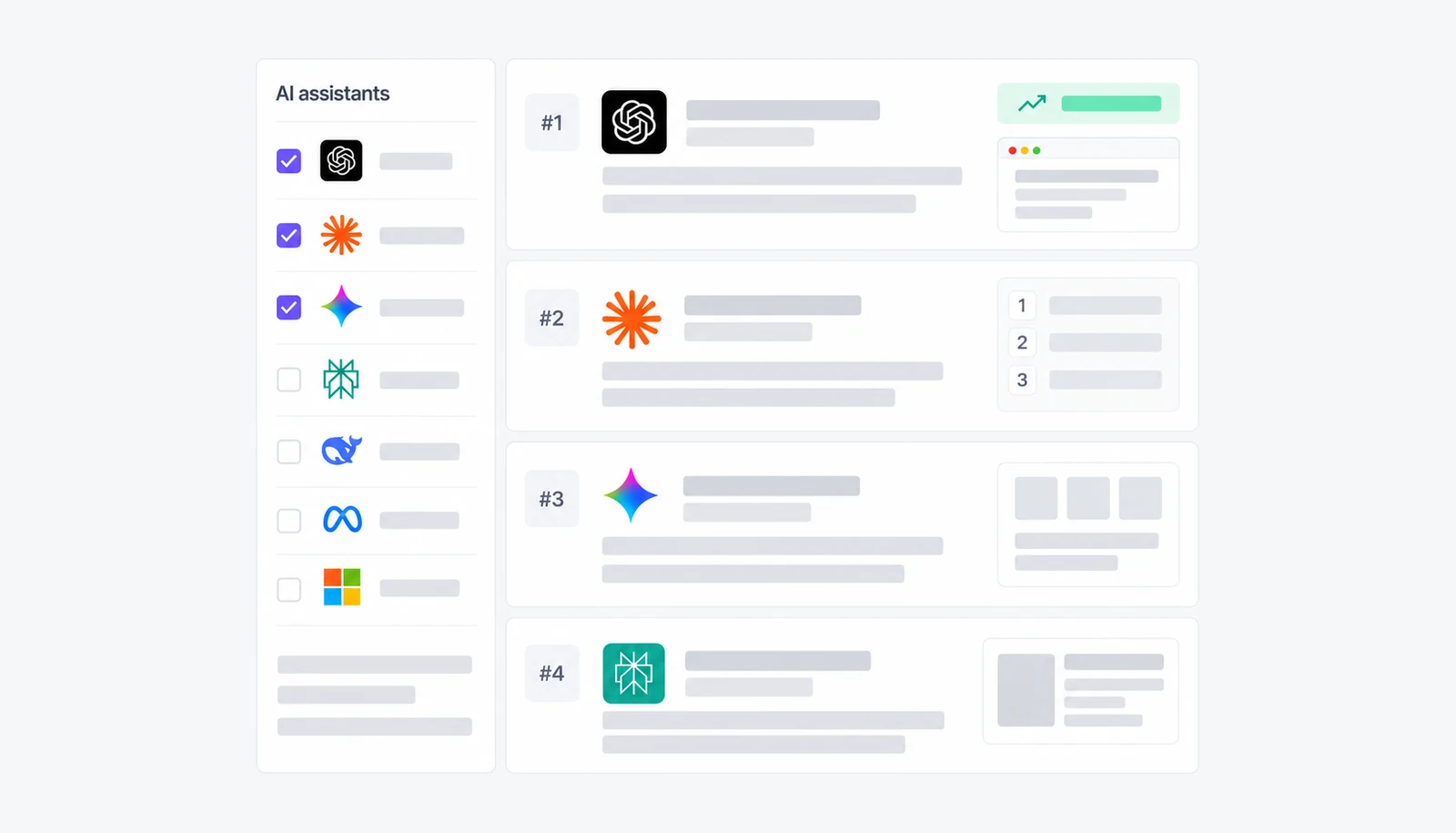
Prompt Discovery
The questions a committee asks in private, tagged by role and intent, re-run weekly so movement is real.
See prompt discovery -
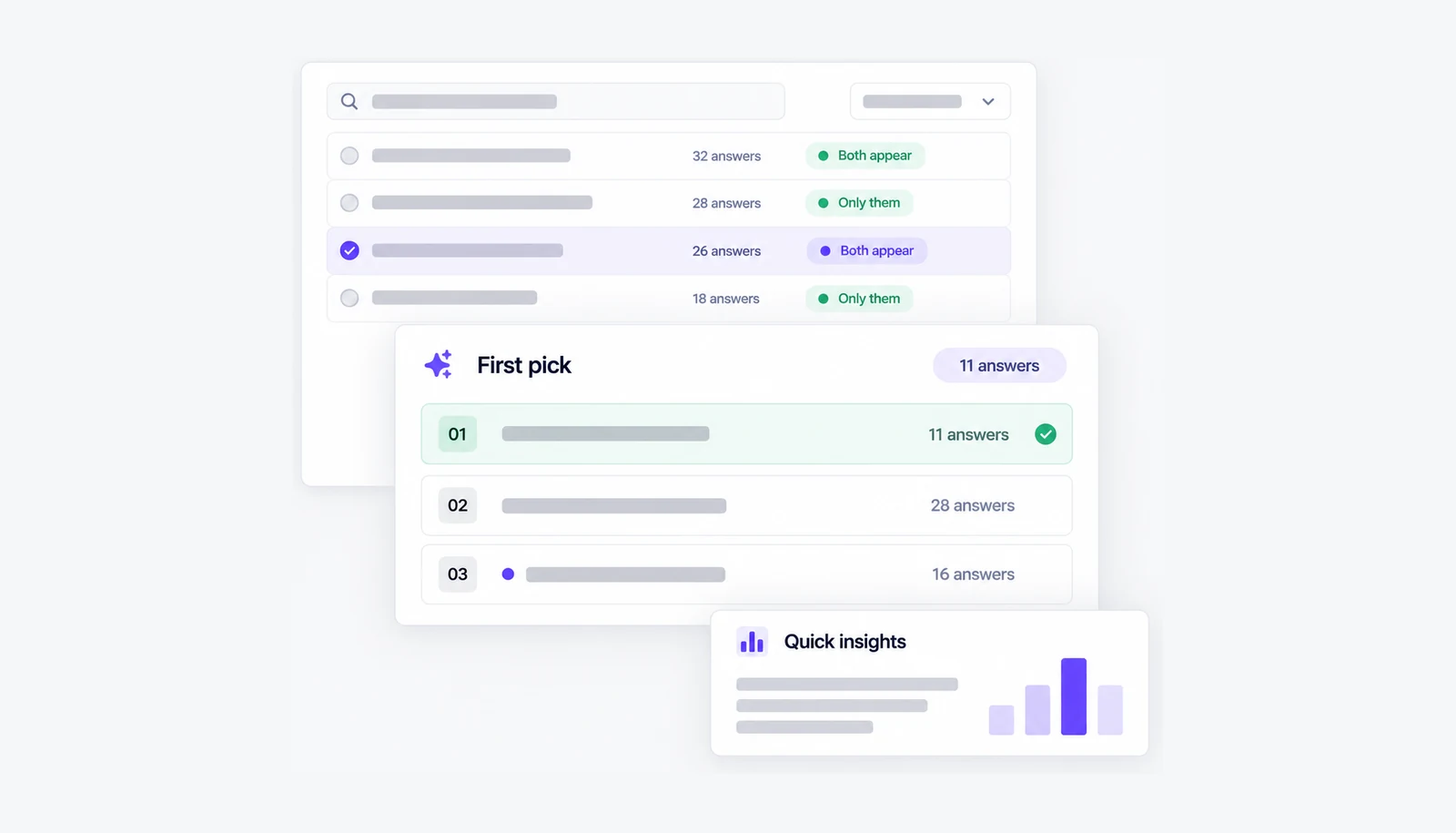
Competitor Tracking
Which vendors get named beside you and which get named instead. The names come from the answers, not a list you typed.
See competitor tracking -
AI Sources
The pages cited when an assistant describes you. Often a directory row or a review you did not know existed.
See AI sources -
Growth Opportunities
Every gap as a ranked move, cheapest first, naming the page to edit or the source to go and correct.
See growth opportunities
B2B questions
The things that come up before the first prompt set goes in.
Our sales cycle is nine months. Does this move fast enough to matter? +
The answer your committee reads is being written now, whatever your cycle length. Readings run weekly and every answer is kept, so by the time a deal closes you have months of history rather than a screenshot from the week somebody asked.
The committee is more than one person. Does that show up? +
Yes. Two buyer roles come out of reading your site, each with what they are trying to do, and every question is tagged to one of them. On one run that was 42 questions for the primary role and 7 for the second. You can correct the roles if we read them wrong.
Which kinds of question do you track? +
Each one is tagged by what it is for: recommendation, comparison, pricing, validation or education. Worth knowing that education questions are usually the majority and rarely name any vendor, so being absent there means much less than being absent from a shortlist question.
An answer says something about us that is wrong. What then? +
You get the full answer and every page that answer cited, so you can see what it was reading. We will not tell you which sentence came from which page — the assistants do not report that, and guessing would not help you write the correction.
We sell through partners. Whose name should we track? +
Track your own. The rival names come out of the answers themselves, so if a partner or a reseller is being named instead of you, it shows up without you having to predict it.
Can we track named accounts? +
No. This measures the category questions your buyers ask, not what one named account sees. Assistants personalise, and nothing we can run tells you what a specific company was shown.
How does this go in a board deck? +
One number per assistant, the sample behind it, and the line over time. Every figure shows how many answers it came from, so the obvious question — is that real or noise — is answered on the slide.
Find out what AI tells your buying committee
Run the free audit on the questions a committee asks before it books a call. If the answer is wrong, you will see the page it read.