Prompt Discovery

Know what buyers ask AI search daily.

We test buyer queries across top AI engines to measure and track your company's presence.


  • Per question

    A score is an average across your questions, and averages hide which ones you are losing. Every question keeps its own line.

  • Three runs each

    Measured, not chosen: three runs land within ±1.1 brands of the truth against a between-run spread of 1.9. Five would buy ±0.8 for 67% more calls.

  • Nine more to confirm

    Named in exactly one run of three? Not a finding yet. The question is re-run nine more times before a lucky single hit is allowed to count.

  • Where it came from

    Every question carries its origin — the Reddit thread and its URL, the People-Also-Ask entry, the rival already ranking for it.


What you track

One score would have told you the wrong thing

A real benchmark, eight runs over fifteen days. The domain score sat near 16% the whole time.

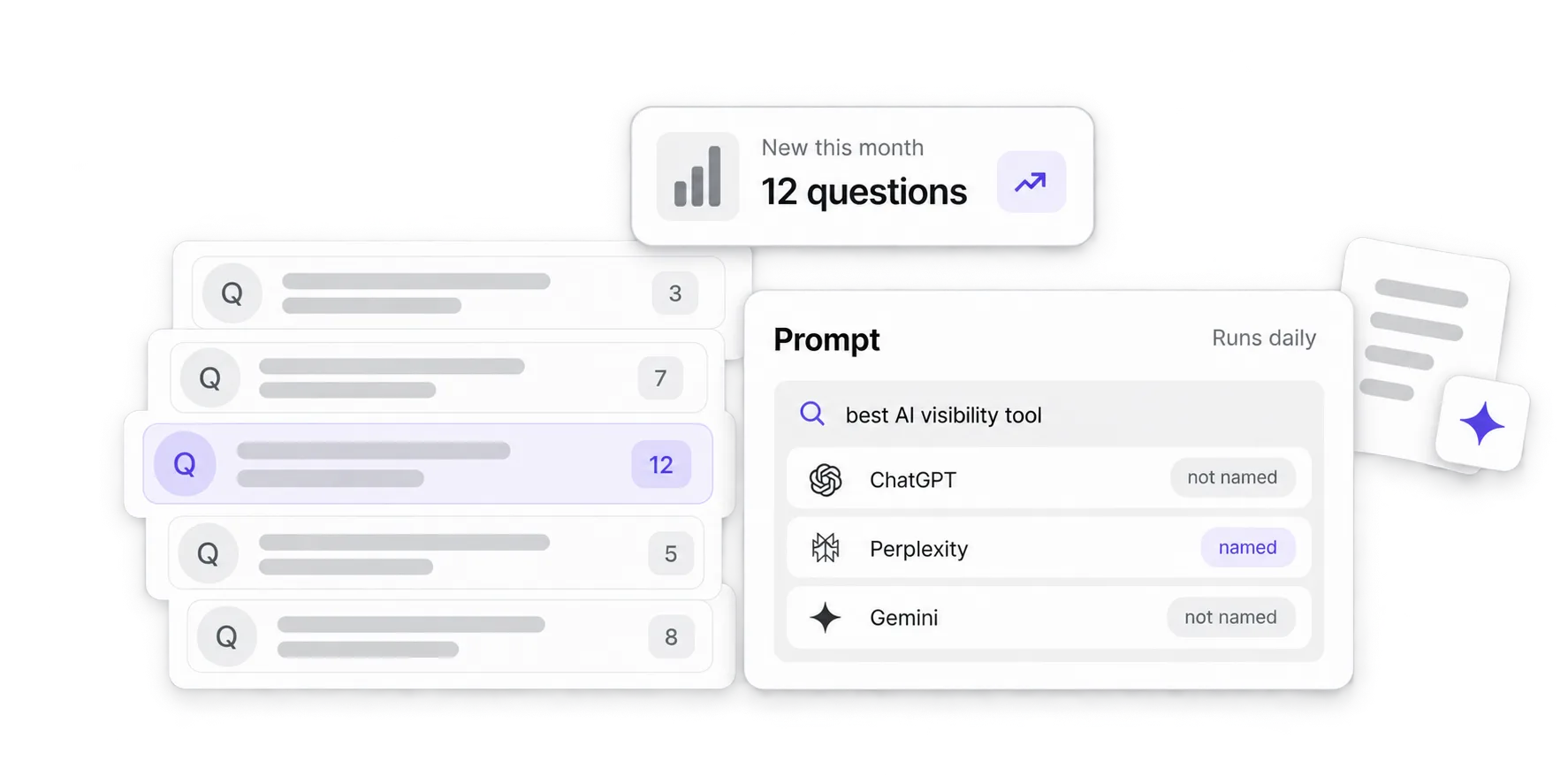
A list of tracked buyer questions, written the way a buyer types them, with no brand name in the query.

01 Real questions, and one was carrying all of it

Nobody types your brand name into ChatGPT before they know you exist, so these are category questions. On this benchmark four of the five have never named the brand once in eight runs across fifteen days, while the fifth names it in about two answers of three every time. The 16% average cannot tell you which four.
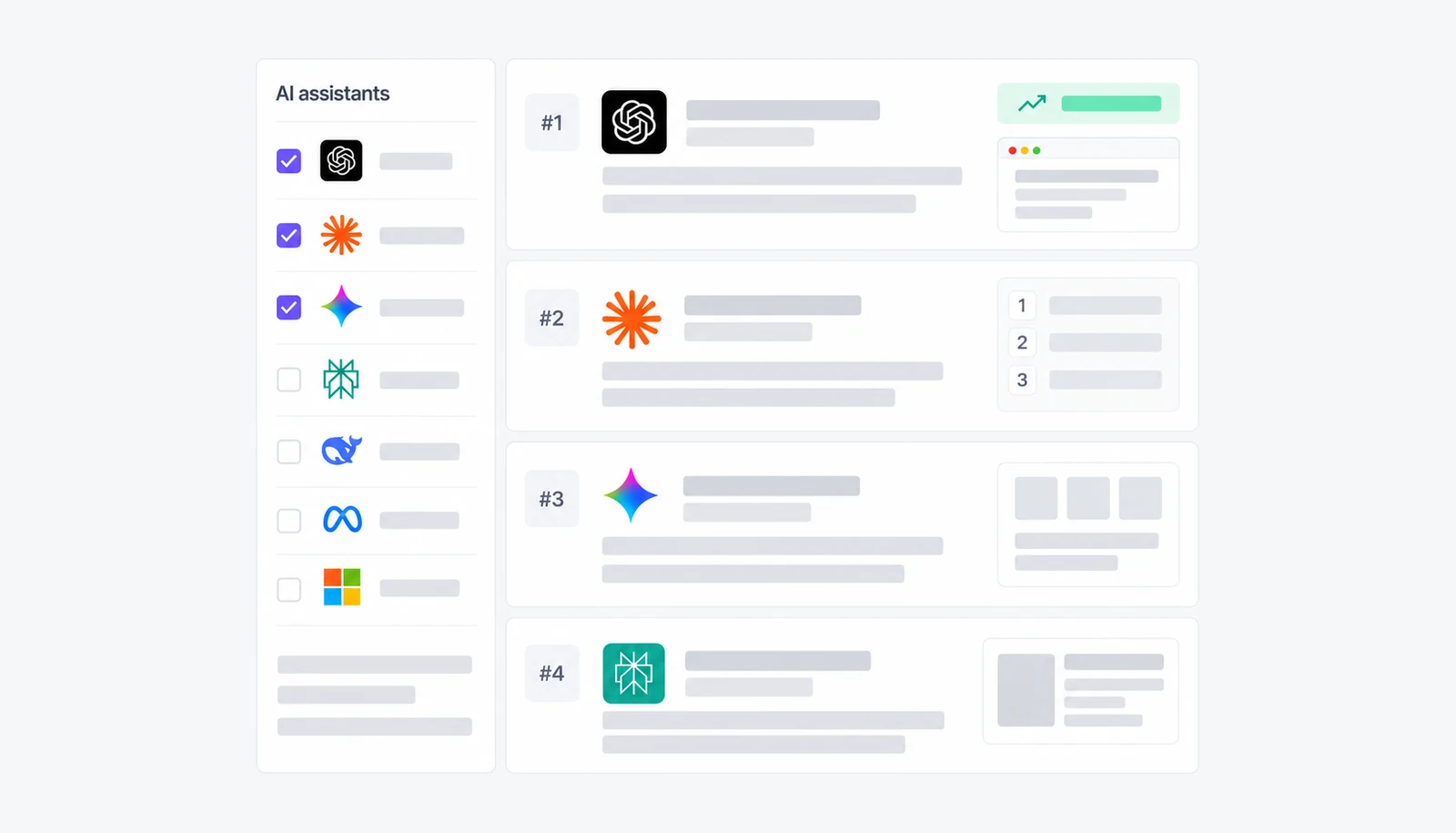
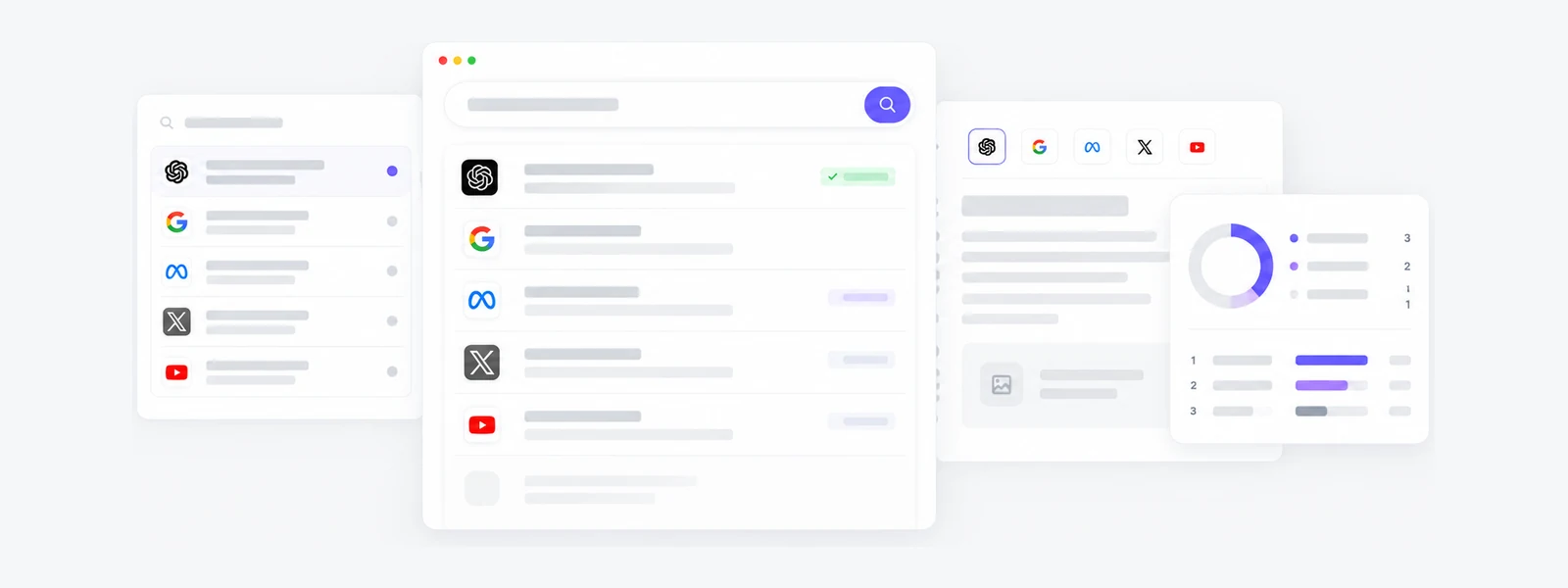
One prompt expanded into a row per assistant, each showing its own answer for the same question.

02 One row per assistant

The same question rarely gets the same answer twice, and never across engines. Each question keeps a separate line per assistant, so a win on one is not hidden by a loss on another — on one run this domain sat at 31% on AI Overviews and 0% on ChatGPT.

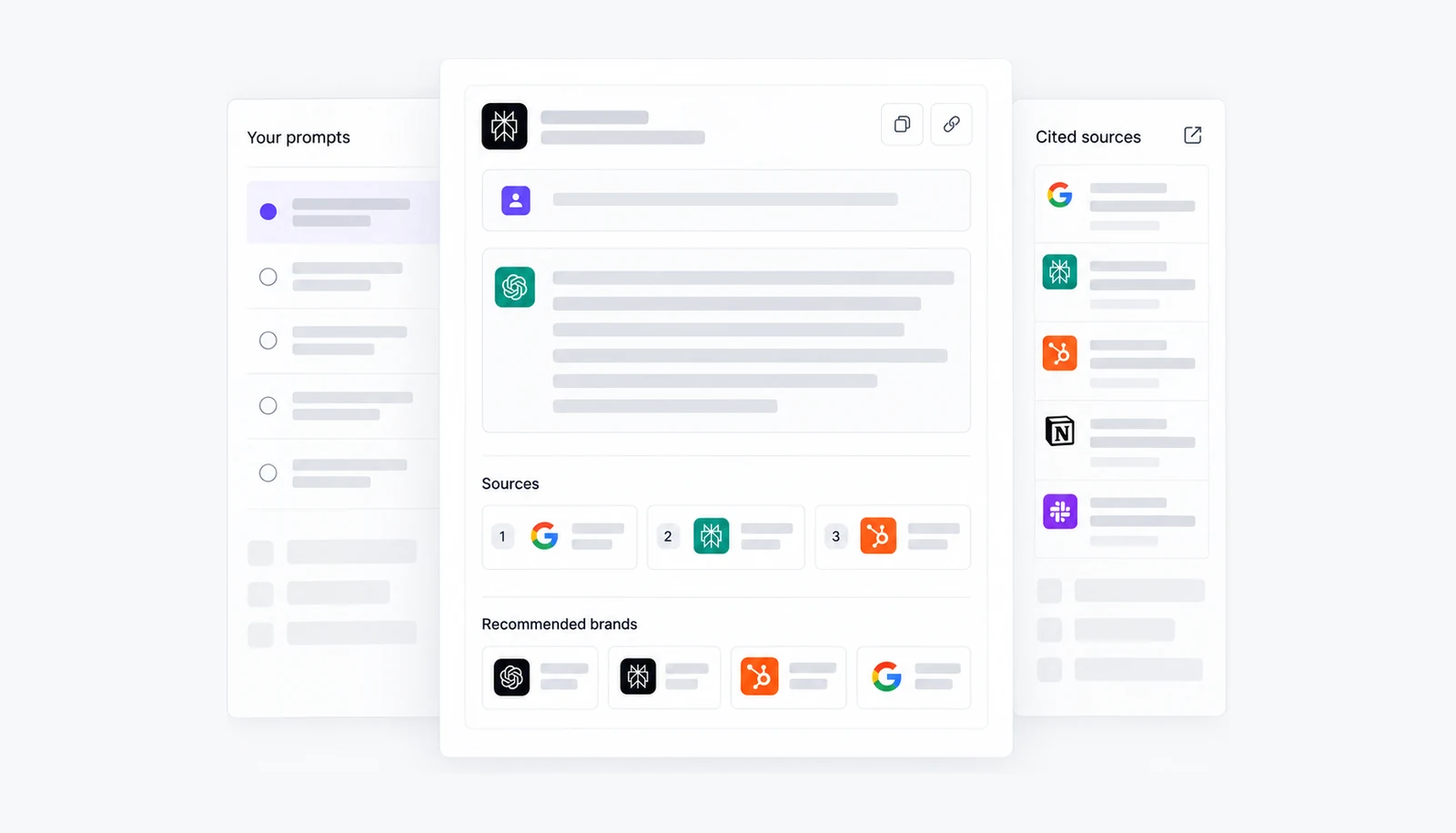
An opened prompt showing the answer word for word alongside the sources it cited.

03 Every prompt opens its answer

Open a question and you get what the assistant produced word for word, the sources it cited, and the brands it named in order. And when a question is named in only one run of three, it goes back out for nine more on the same engine before that counts as anything.

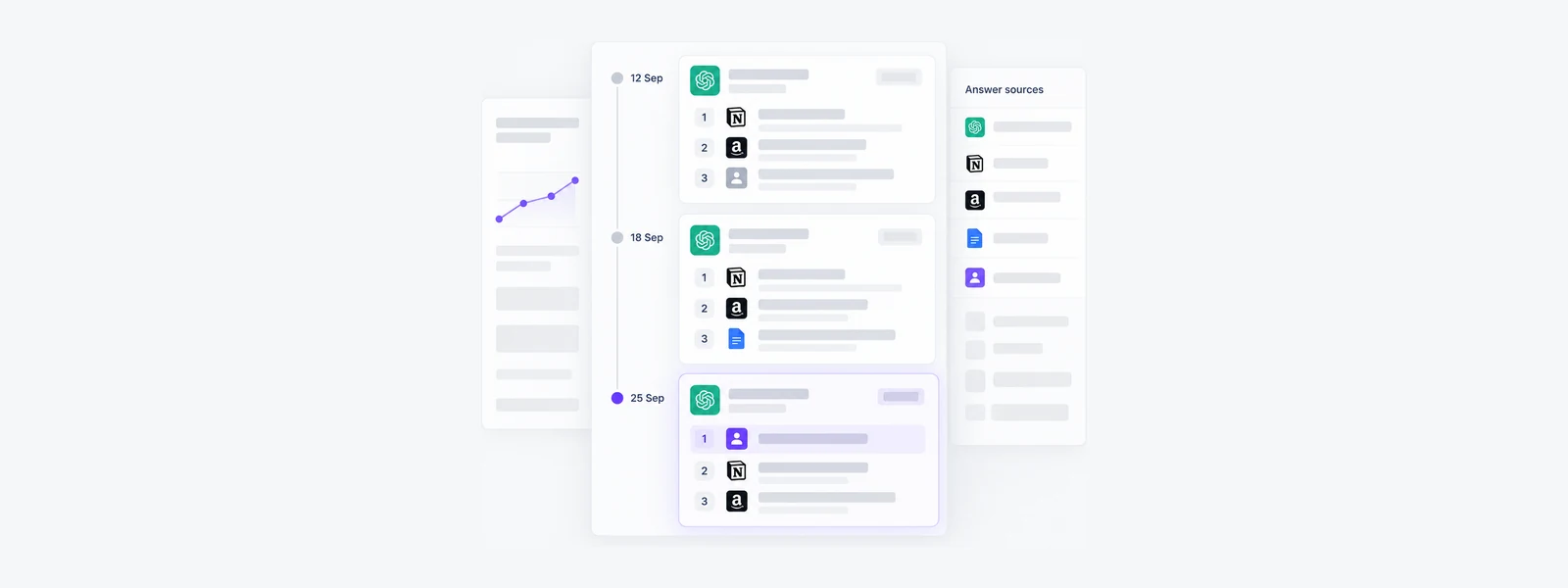
Two saved versions of the same answer side by side, showing the moment it changed who it named.

04 Watch an answer change

Every run of every question is kept in full, so when an answer stops naming a rival and starts naming you, both versions are there to put side by side. Readings stay per run rather than merged into a day — one afternoon of five runs on one question has returned anywhere from 0 of 9 to 3 of 9.


Find the questions you are losing every day.

Five locked buyer questions, four assistants, three runs each — sixty answers, all readable, and a line per question rather than one number.

Discover Buyer Prompts

FAQ

Questions people actually type

What teams ask before they start tracking prompts.

What is prompt discovery? +

It means finding the questions your buyers ask AI, then asking those same questions on a schedule and saving every answer. The list stays fixed between runs, because if the questions change, the trend stops meaning anything.

How do I know which prompts to track? +

You don't have to pick them. On the last run we tested 49 questions, gathered from Reddit threads, Google's "People also ask", city variations and the competitors already showing up, and 26 passed our checks. We lock 5, show every rejected question with the reason, and you can remove any you don't want.

How often do prompts run? +

Once a week by default. Every six hours we check for any question set that hasn't run in seven days. Daily runs are possible; it is a question of cost, since three runs on four AI platforms is 12 answers per question.

Why three runs and not one? +

Because a single run isn't reliable. SparkToro repeated the same prompts nearly 3,000 times, and two runs of one prompt gave the same brand list less than 1 time in 100. We settled on three after measuring: it narrows the swing to about one brand, against nearly two between single runs.

What happens if my brand only shows up once? +

We run that question nine more times, on the same AI platform and in the same market, before we count it. Showing up once in three runs is what random chance looks like, so calling it a win would be misleading.

Is this different from keyword rank tracking? +

Completely. A keyword leads to a ranked list of pages, while a question to AI gets one answer naming a few brands and citing a few sources. You can rank first on Google and still be missing from the AI answer built on top of it.

Do you keep the old answers? +

Yes, all of them, in full, with the date, AI platform and run number. When an answer changes, you can put the old and new versions side by side instead of just trusting a number that moved.


Next in the platform

See how you rank against top companies.

Uncover competitor share of voice and learn why AI answers recommend them over you.

Competitor Tracking
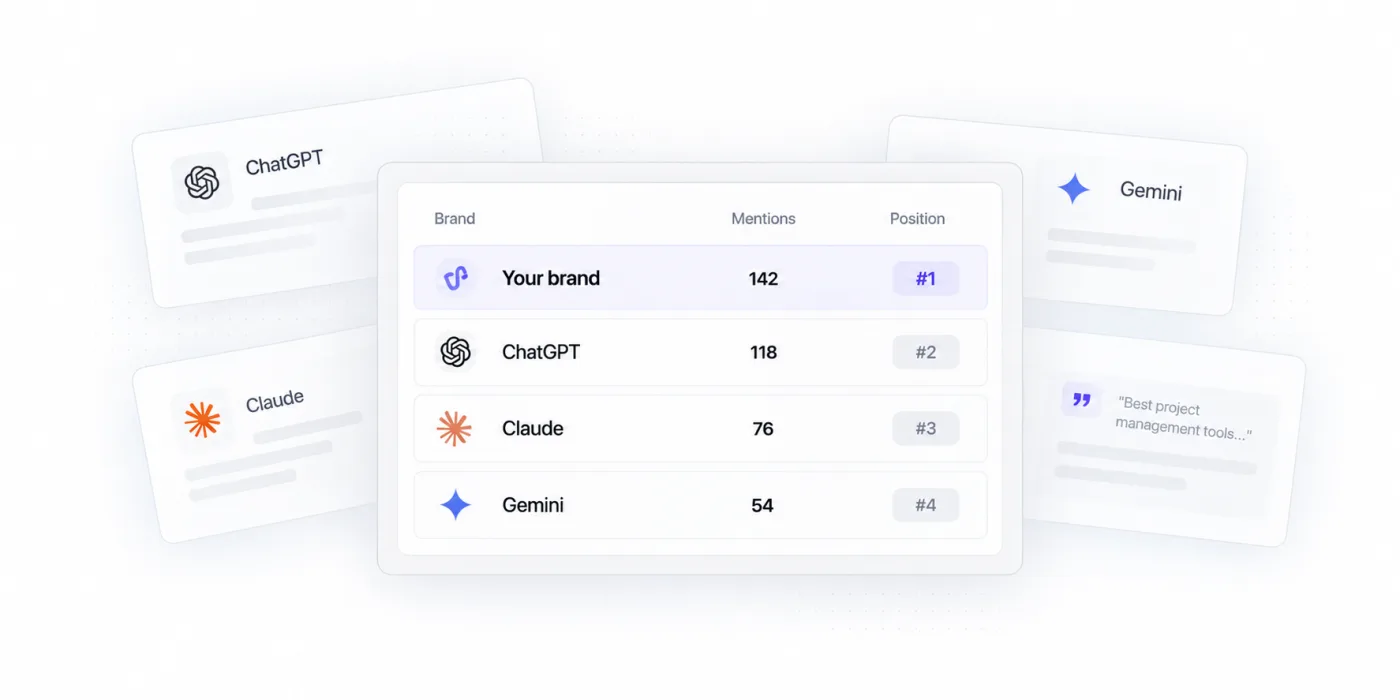
The Competitor Tracking view — the rivals AI names instead of you.