When a buyer asks AI
which tool to use.
You get a straight answer: are you named, who is named instead, and which pages those answers were reading. One domain is all we need — there is no list to prepare first.
Want to see the method first? How the questions get picked
- One domain in, nothing to configure
- First run in about twelve minutes
- Free audit, no card
AI is recommending someone else and you never see it
The shortlist gets made inside an assistant. If you are not on it there is no visit, no search, and no sign you were skipped.
-
Three tools get named, none of them you
No visit, no search, no lost-deal note. The loss leaves nothing behind for you to find.
-
There is nobody to hand this to
No SEO hire, no agency. Whoever checks this also runs sales and the roadmap, so it has to be worth the hour.
-
Zero is where most early products start
We ran one product through 57 answers and it was named in none. Another was named in 3 of 58 while the category leader took 47. Every demo dashboard you have seen opens at 68% — that is sample data, not yours.
-
You cannot put a real number in the deck
"We think AI mentions us sometimes" is not a metric. Neither is a score out of 100 with no sample size printed next to it.
One straight answer, and the next move
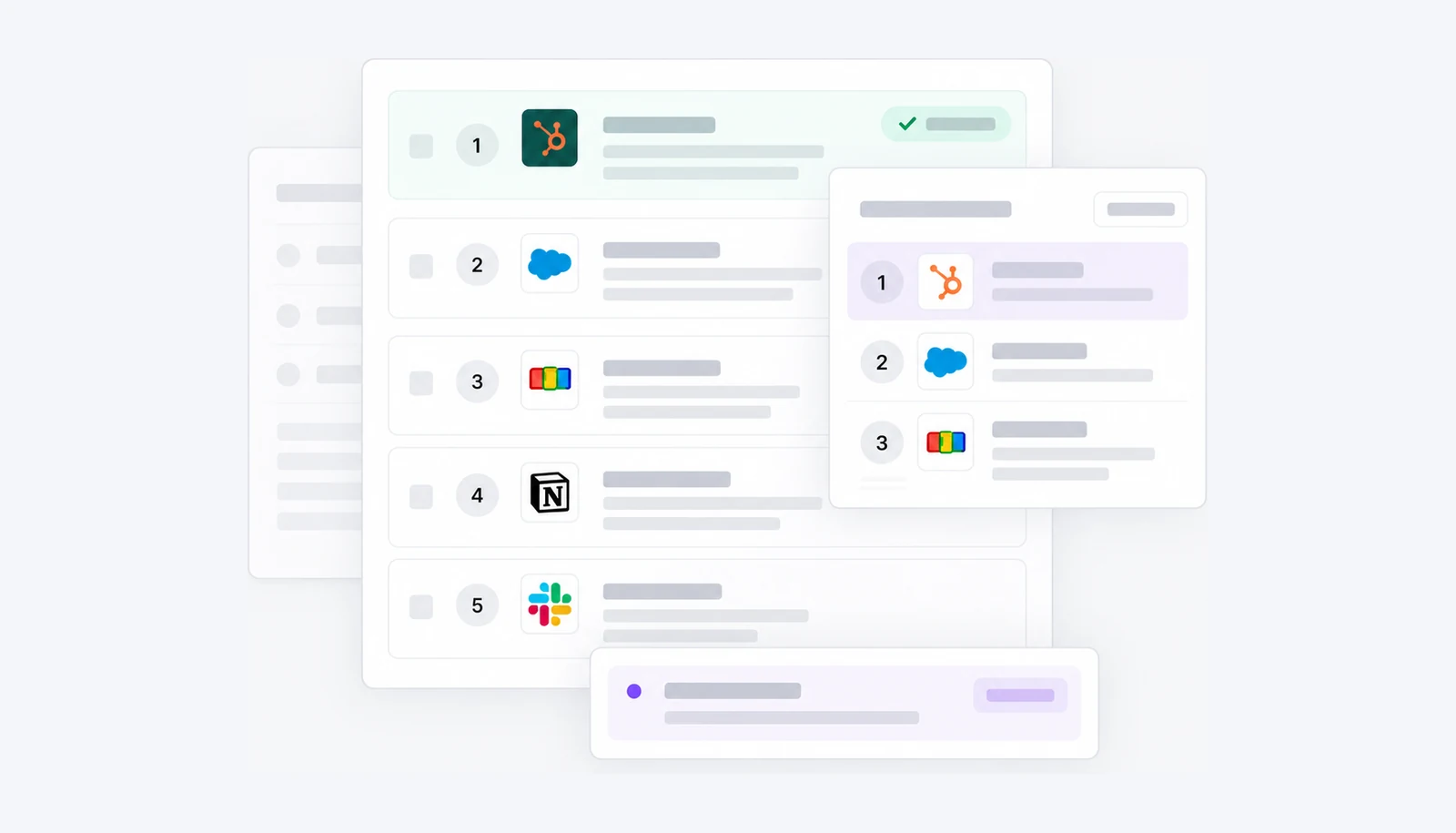
You find out whether you exist yet
How many of your buyers' questions name you at all, scored on each assistant separately. They disagree with each other more than you would expect.
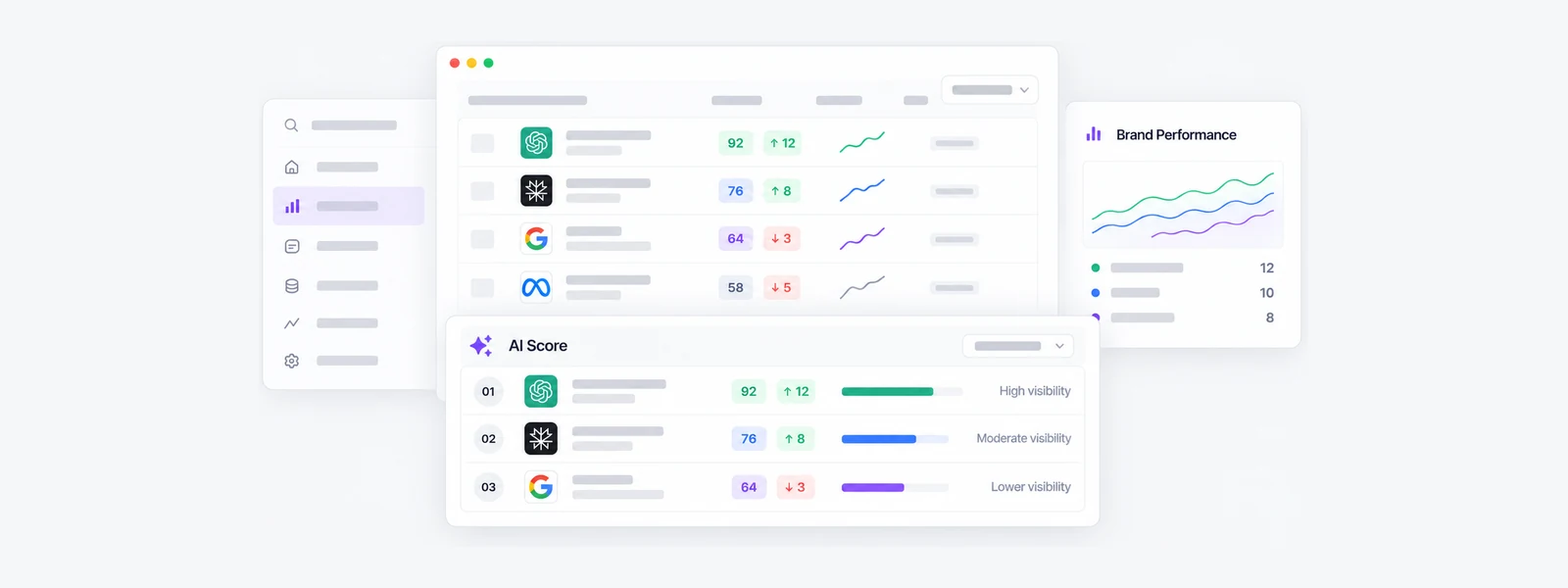
You find out who took the slot
The names the answers actually used, and how much of the category each one holds. You do not supply the list.
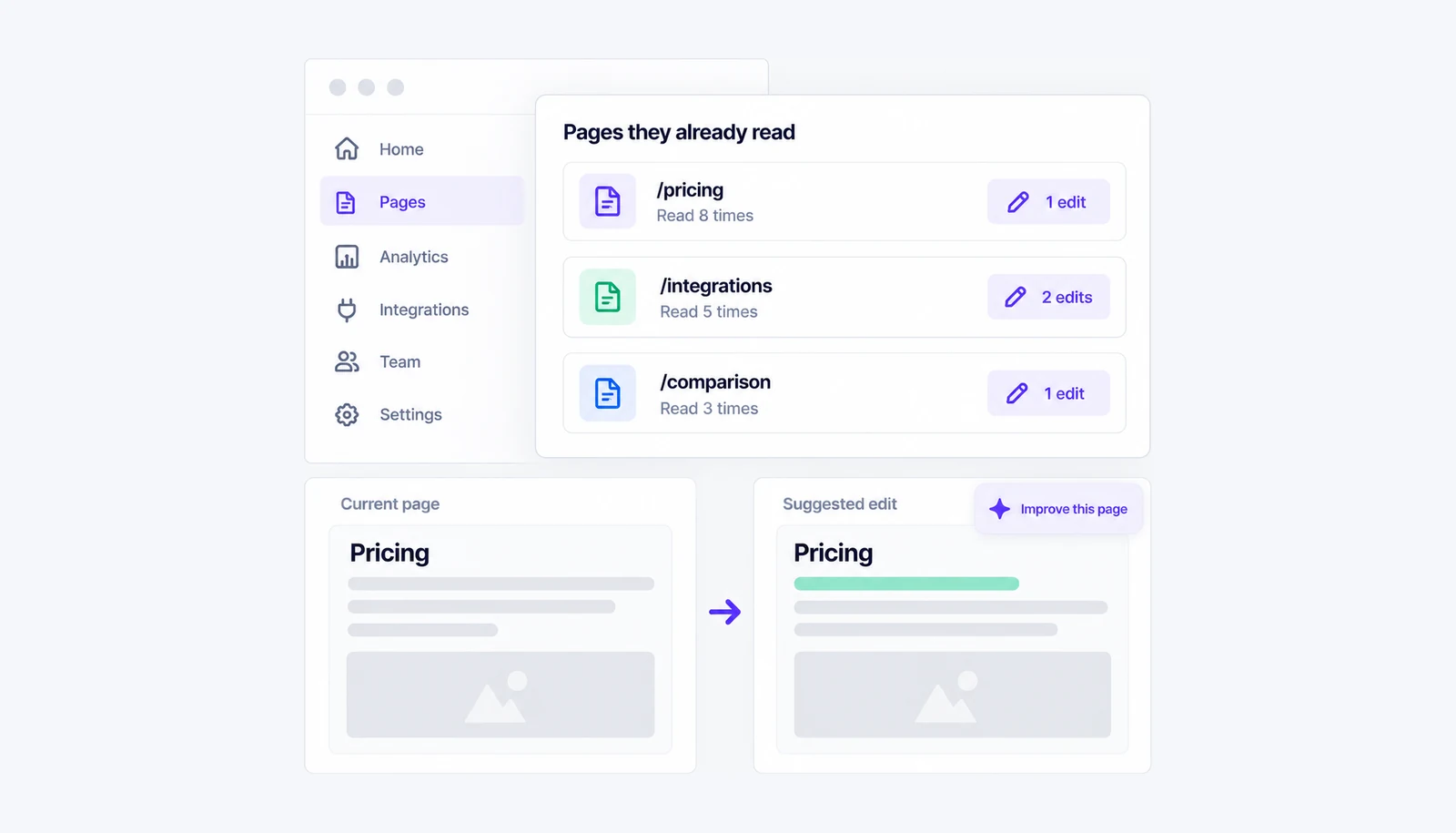
You get one thing to do
Ranked cheapest first, so four hours this week goes on the move most likely to shift the number.
Twelve minutes, then a weekly check
Four steps from your homepage to a straight answer on whether AI recommends you.
-
Point it at your website
One field, your domain. We read the site and work out your category, who your buyer is, and the nearby categories that are not you — so you are never measured in the wrong market.
No setup call and no list to prepare
Step 01
-
It finds the questions and the rivals itself
Questions come from Reddit threads, People Also Ask, search volume and the rivals already ranking. The rival names come out of the answers. You never type a competitor list, which matters because some of the names that come back are not competitors you would have thought of.
Nothing to guess at before you start
Step 02
-
Read the first run
Five questions, four assistants, three runs each. Sixty answers, all saved. Recent runs took about twelve minutes; a large site can take half an hour.
A straight answer today, not next quarter
Step 03
-
Do the top move, then it runs again
One page, one thread, one correction. The same locked questions go out weekly, so you find out whether it moved.
One move, and then proof it landed
Step 04
Enough platform, not a second job
-
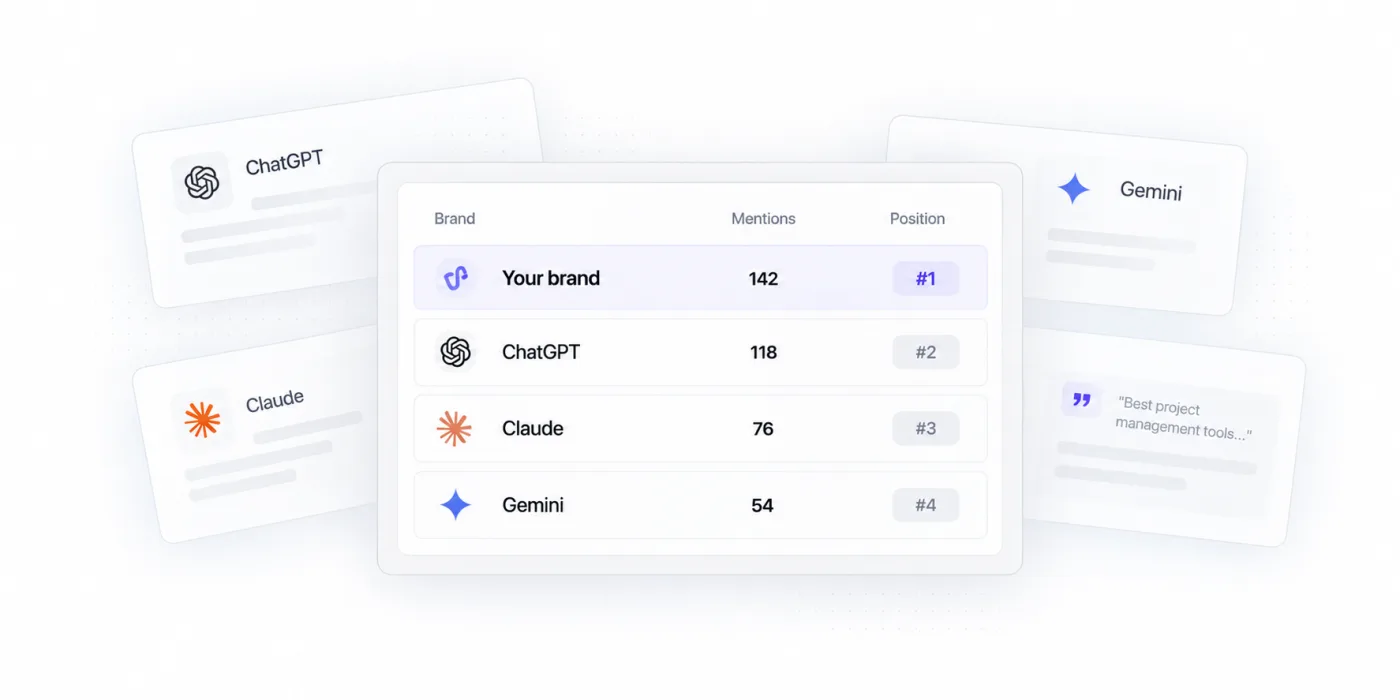
Competitor Tracking
The names taking the slot you wanted, read out of the answers rather than a list you typed, and how far ahead of you they are.
-
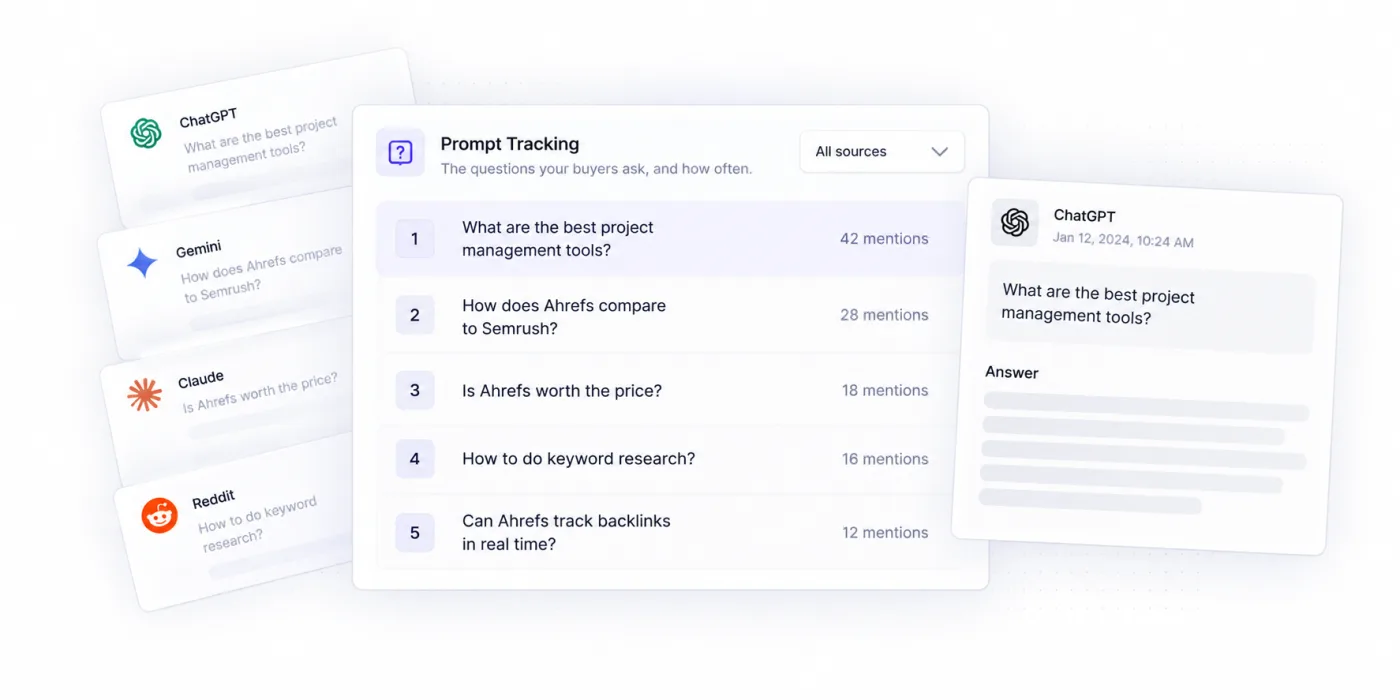
Prompt Discovery
The buying questions in your category, asked three times each on a schedule so nobody has to check by hand and a change is real.
-
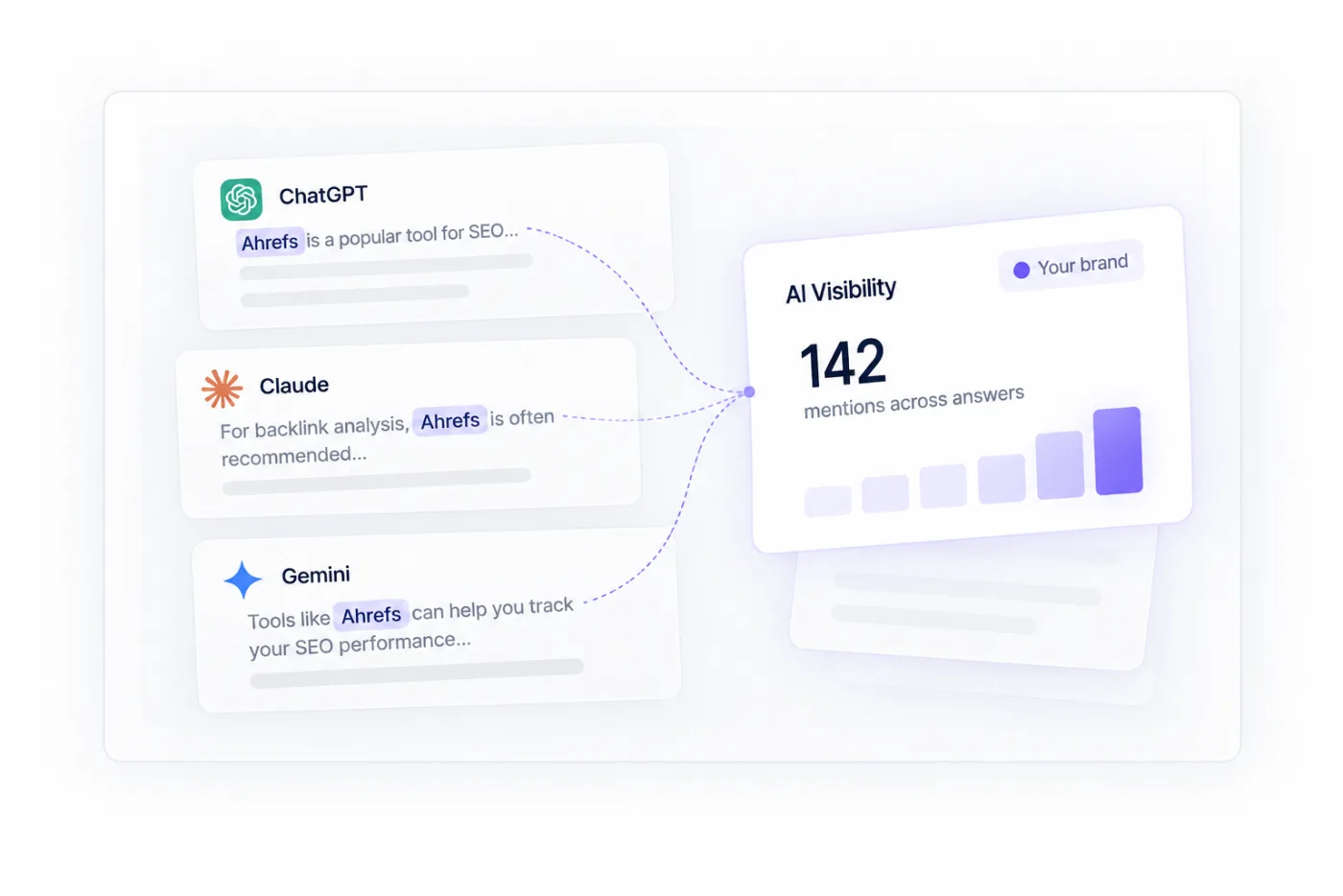
AI Visibility
Whether assistants name you at all, per engine, with every answer stored so you can read the exact wording yourself.
-
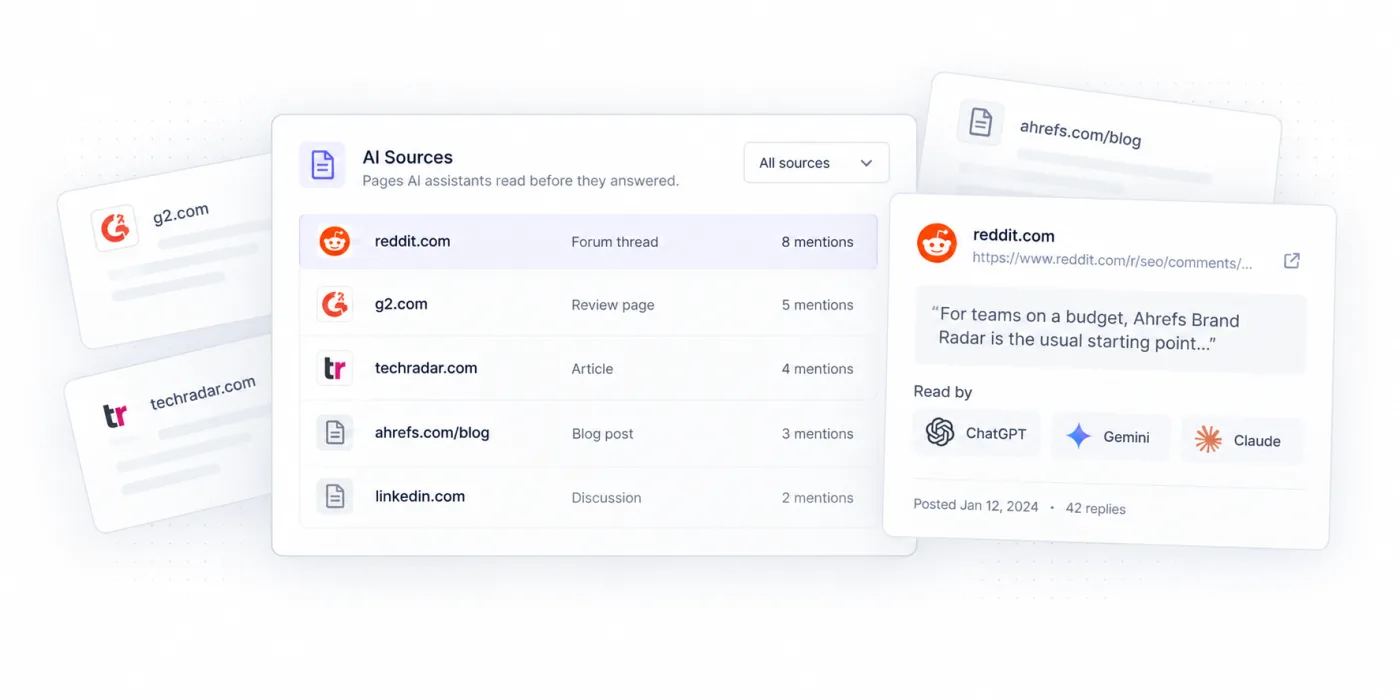
AI Sources
The pages cited in the same answers — usually somebody else's, which is exactly where the opening is. About half are ones you could get onto.
-
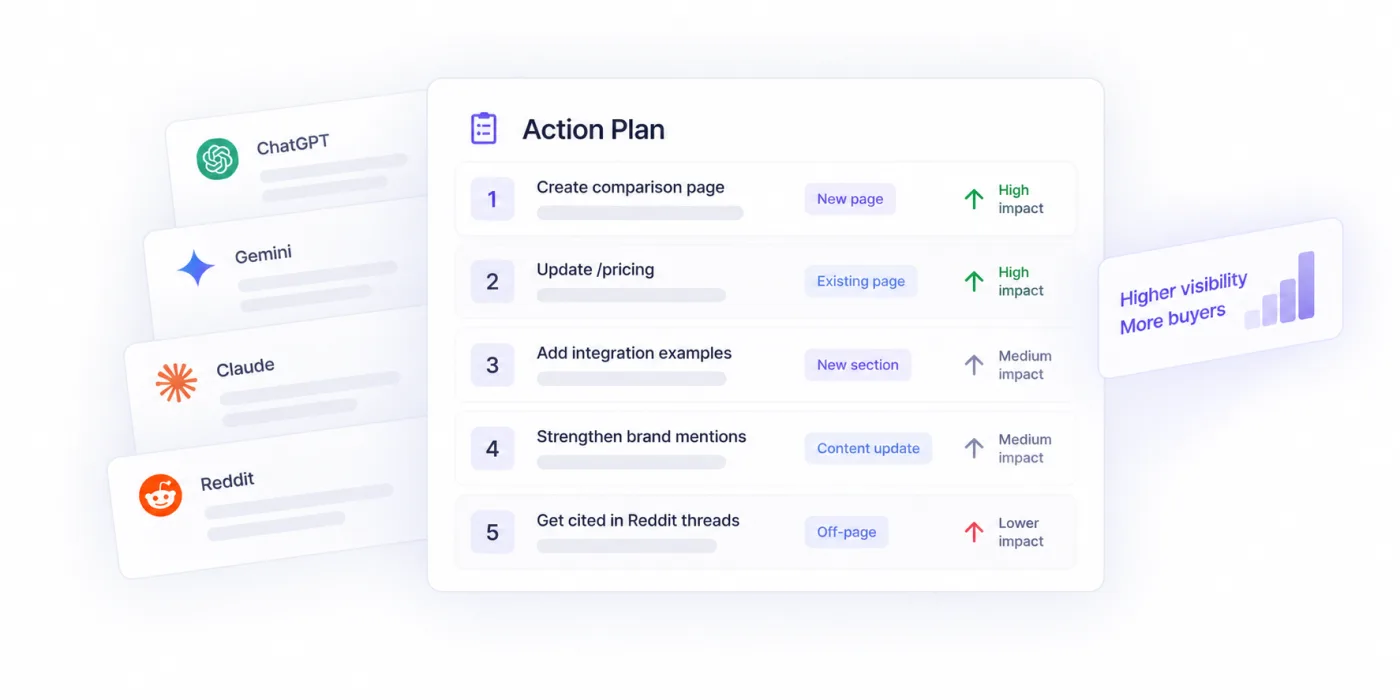
Growth Opportunities
A short ranked list of what to publish or correct next, sized for a team with no content department.
Founder questions
The short answers, before you spend an hour on it.
We are pre-launch. Is this too early? +
You need a site up, because the run starts by reading it to work out your category and your buyer. If that exists, it is not too early — the answer forming in your category now is the one you will have to displace later.
Do I have to give you my competitor list? +
No, and that is deliberate. Most tools ask for three to five names before they start looking, which means you only ever measure against the rivals you already thought of. Here the names come out of the answers, and some of them will be brands you have never tracked.
Everyone else gives a score in sixty seconds. Why does yours take twelve minutes? +
Because it actually asks the questions rather than scanning your site. Five questions, four assistants, three runs each is sixty answers. One pull is not a measurement — two runs of the same question return the same brand list less than once in a hundred, so a sixty-second score is a coin flip with a progress bar.
How much time does this take a week? +
Setup is one field. After that, about twenty minutes to read the run and pick the next move. The checking is the part we take off you.
Do I need an SEO person to use it? +
No. Each move is written as an instruction — this page, this claim, this thread — with the answer that produced it, not as a technical audit you have to translate.
What if we come back at zero? +
That is normal early and it is still information. Two of the three products we ran most recently were at or near zero while the category leader was in most answers. The run also shows which pages those answers were reading, which is where you start.
What if the assistant says something wrong about us? +
You get the exact wording and every page that answer cited, so you can see what it was reading. We will not tell you which sentence came from which page — the assistants do not report that, and a guess would not help you write the correction.
Which assistants do you check? +
ChatGPT, Perplexity, Gemini and Google's AI Overviews, scored separately. On one run the same five questions named a brand in 13 of 15 Gemini answers and 4 of 15 on Perplexity, so a blended number would have told you nothing useful.
What does it cost to start? +
The audit is free and needs no card.
Find out if AI recommends you yet
One free audit tells you whether your buyers' assistant names you, who it names instead, and the pages those answers were reading.