AI Sources

Get cited where AI finds answers.

We identify top-cited sources and publish content so AI platforms recommend your solutions.


  • Pages cited

    Every site an assistant opened while answering your questions. One real run: 434 citations behind 58 answers.

  • Who owns it

    Seven kinds. Your site, reviews, communities, open platforms, third-party pages, reference, and a rival's own domain.

  • What you can take

    Pages you could realistically get onto. 53% on that run, or 32% if you ignore everything we could not attribute.

  • Your pages

    The exact URLs of yours that were opened, how many answers each fed, and which assistants read them.


The reading list

Half of what it reads, you can never publish on

One real run: 434 citations behind 58 answers. The split is the finding.

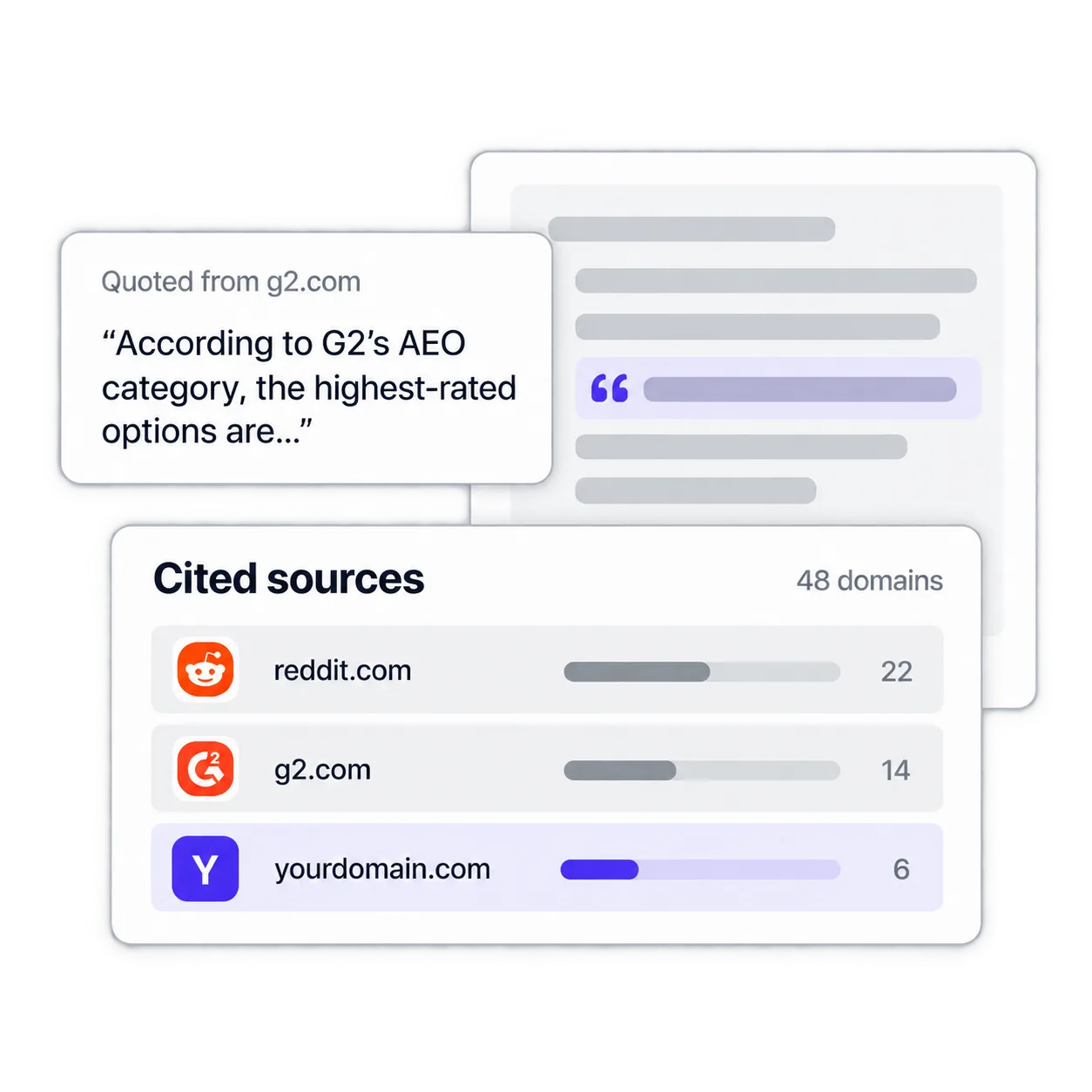
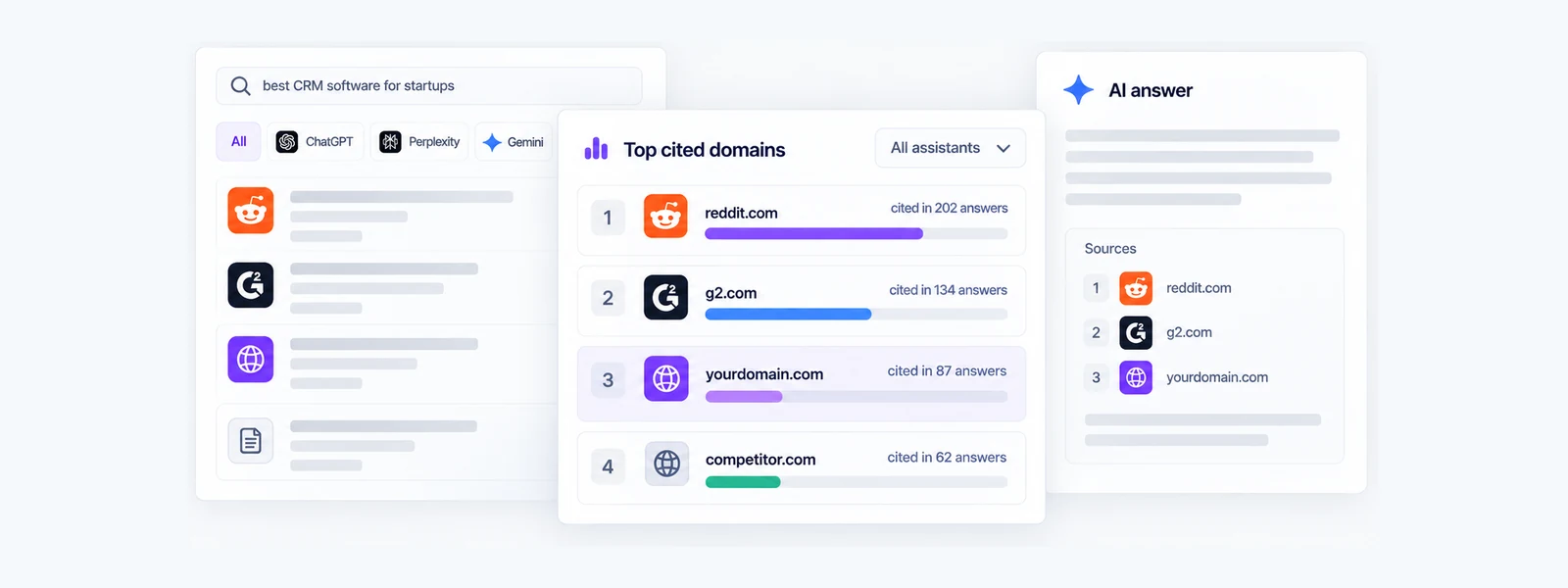
A ranked list of the domains assistants read, with a rival's own sites making up the largest share.

01 The biggest source is your rivals

202 of the 434 citations pointed at a competitor's own website, across 47 different domains. That is 47% of everything read, and it is the one place nobody can publish. Any plan that counts it as an opportunity is twice the size it should be. Review sites, which every guide tells you to chase, were cited three times.
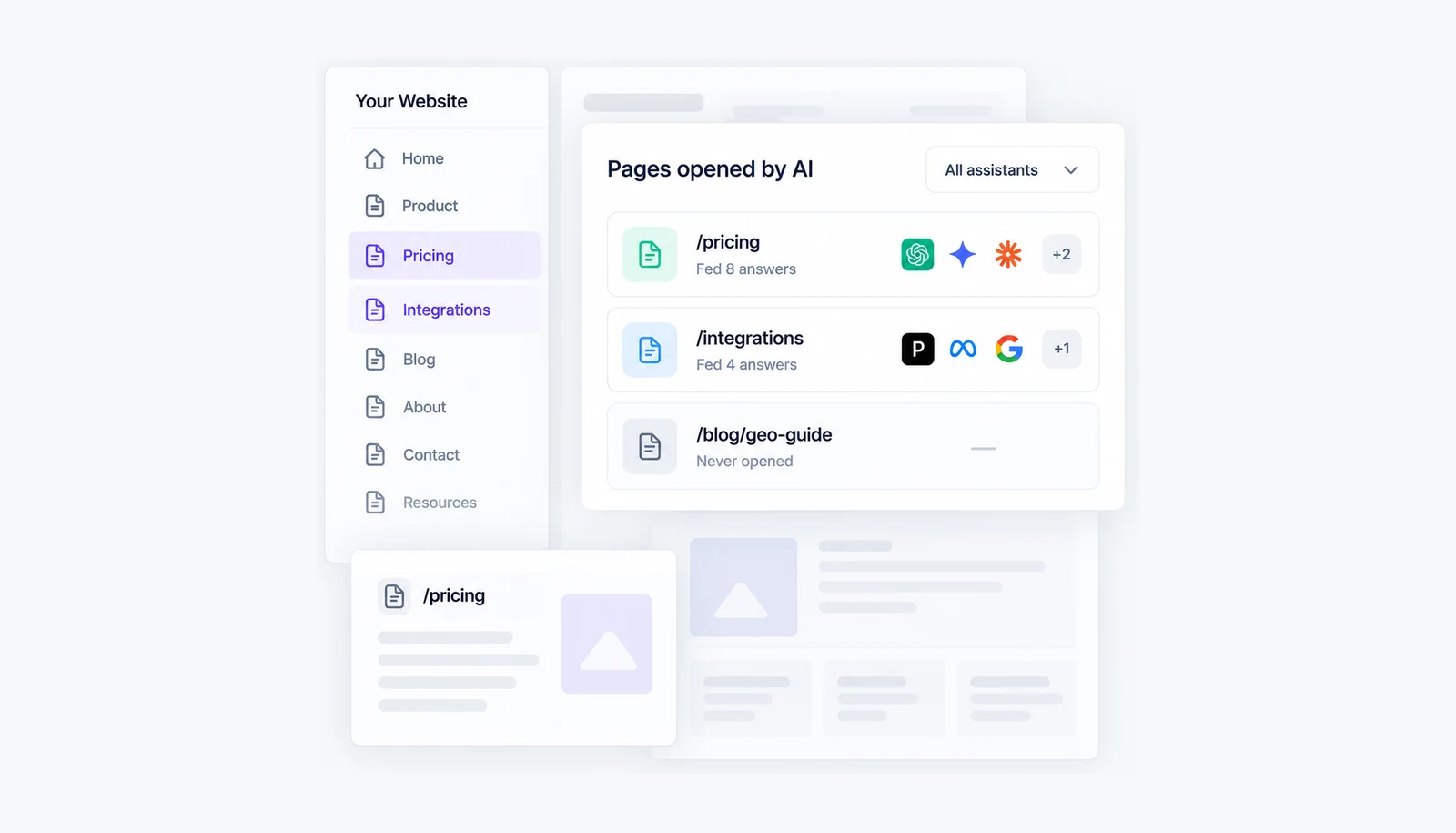
The brand's own pages listed against the answers they fed.

02 Your own pages, and which ones

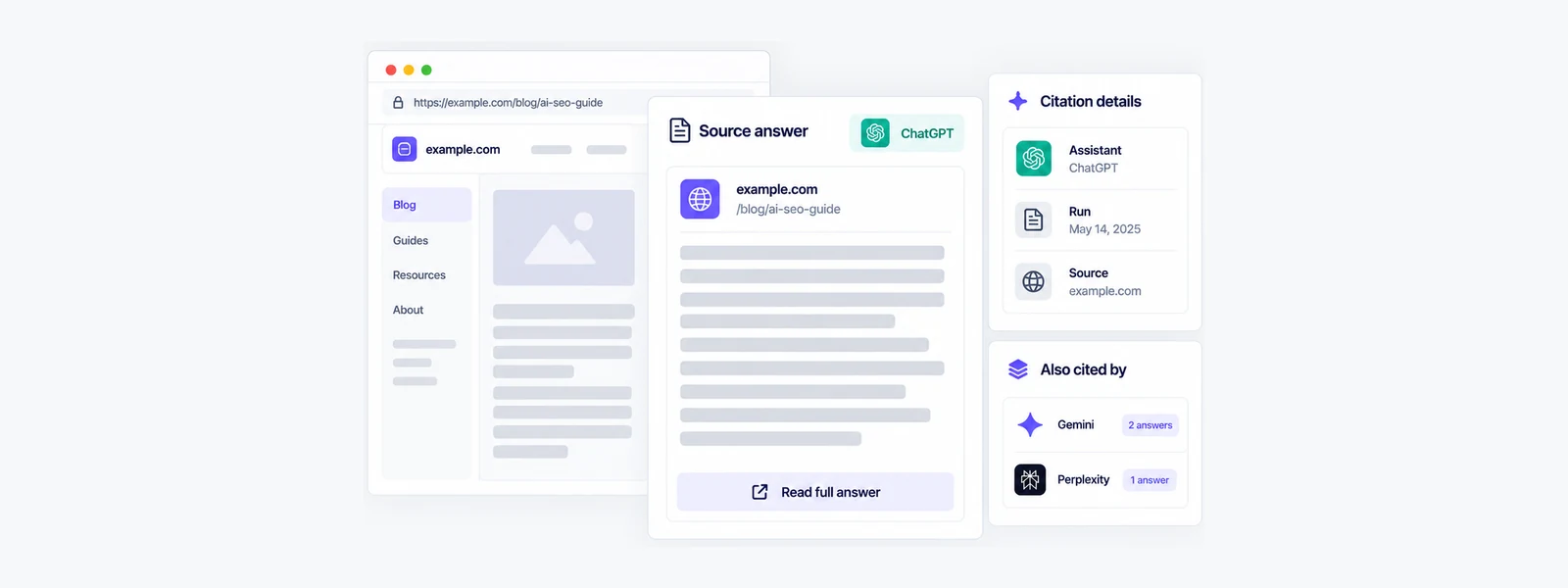
When an assistant does open your site, it opens particular pages. They are rarely the ones you would guess. Each is listed with the answers it fed and the assistants that read it. On this run two blog posts fed six answers each. Those are the pages worth editing. The rest of your site is not in this conversation.

A source opened to show every answer it fed.

03 Every source opens its answers

Open a domain and you get every answer it fed, in full, with the assistant and the run. You read the whole answer rather than a snippet. We do not mark which sentence came from which page, because the assistants do not tell us that.

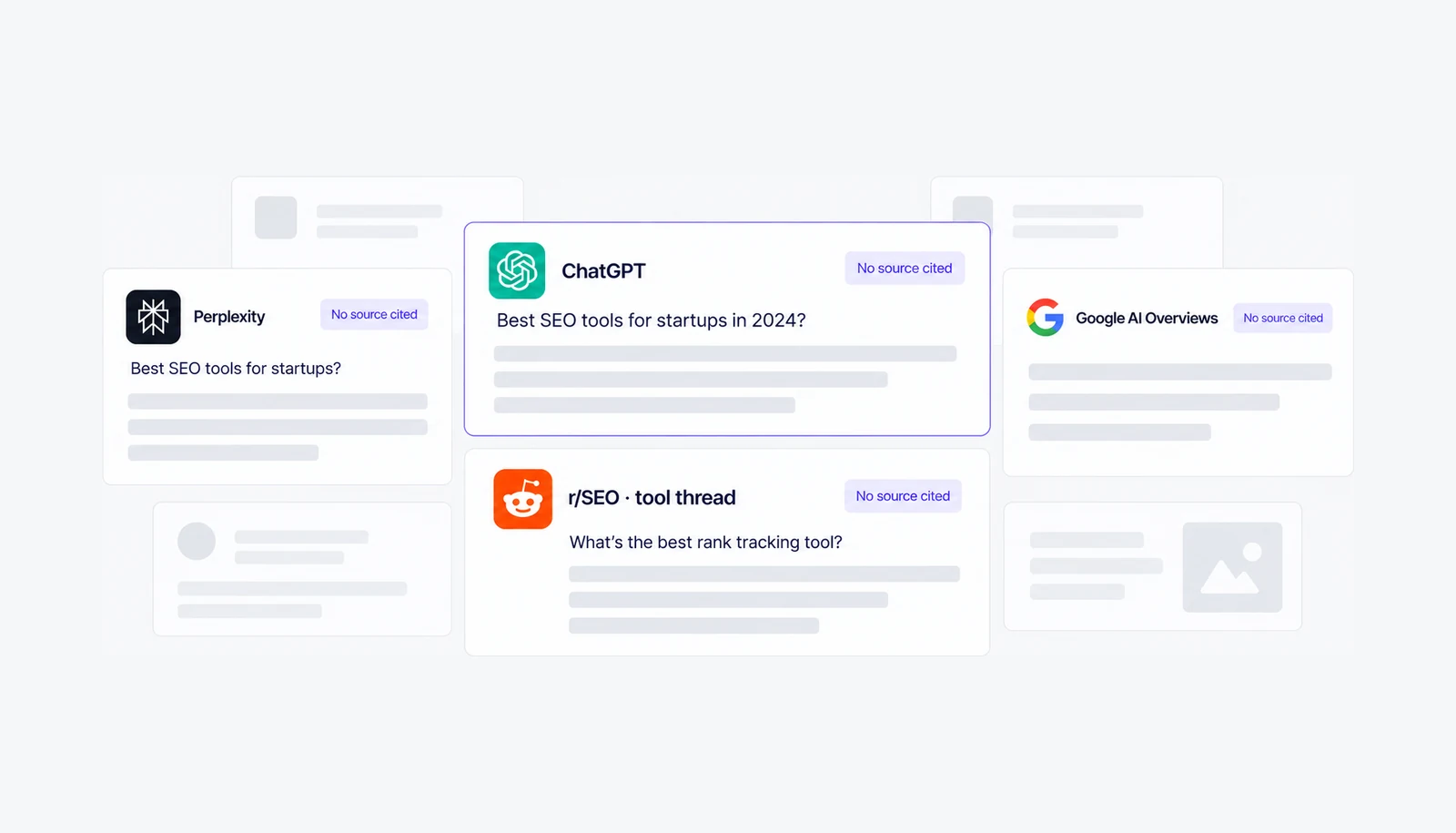
Answers grouped by whether the assistant searched before replying, and how many cited nothing.

04 Some answers cite nothing at all

Perplexity and Google AI Overviews searched on every answer. ChatGPT searched on 40% of them, so most of its answers came out of training data with no page behind them. There is no source to displace there, and that is worth knowing before you spend a month chasing one.


Find out what AI reads before it answers.

Every page cited for your category, sorted by who owns it, with your own pages named and the reachable ground counted instead of guessed.

Find Citation Sources

FAQ

Questions people actually type

What people ask the first time they see the source list.

What sources does ChatGPT use to answer questions? +

It depends on the category, so a general answer doesn't help much. In one real run of 58 answers there were 434 citations: 47% were competitors' own websites, 32% were third-party pages, and review sites appeared only three times. Your mix will look different.

How do I get cited by AI? +

Start with the pages AI is already reading. In most runs, a handful of your own pages get opened again and again, so improving those is an edit, not new work. After that, go after the open pages AI already cites where a competitor is named and you are not.

Why does AI never open my blog? +

We can show you which of your pages AI opened in a run. We can't show which pages it looked at and skipped, because from the outside that looks the same as never finding them. What the list usually shows is that AI reads different pages than your team expected.

Do backlinks matter for AI citations? +

That isn't something we measure, and we'd rather say so than guess. We measure which pages were cited in your buyers' answers, who owns each one, and which ones you can get onto. What makes a page citable in the first place is a separate question, and the published evidence is thin.

Which type of source matters most? +

Whichever type your category's answers actually cite. In the run above, open platforms were cited nine times more often than review sites, but in another category that can flip. Check your own data before trusting a generic playbook.

Can I see the exact passage that got quoted? +

You get the full answer each source contributed to, along with the AI platform and the run. We don't mark which sentence came from which page, because the AI platforms don't report it, and guessing would not be real evidence.

Why separate a competitor's own site? +

Because it's the one page you can never publish on, and in that run it made up 47% of everything cited. Counting it as open to you would double the size of any opportunity list. We sort pages by owner before matching brand names, so an open platform that happens to share a name with a brand isn't filed as a competitor.


Next in the platform

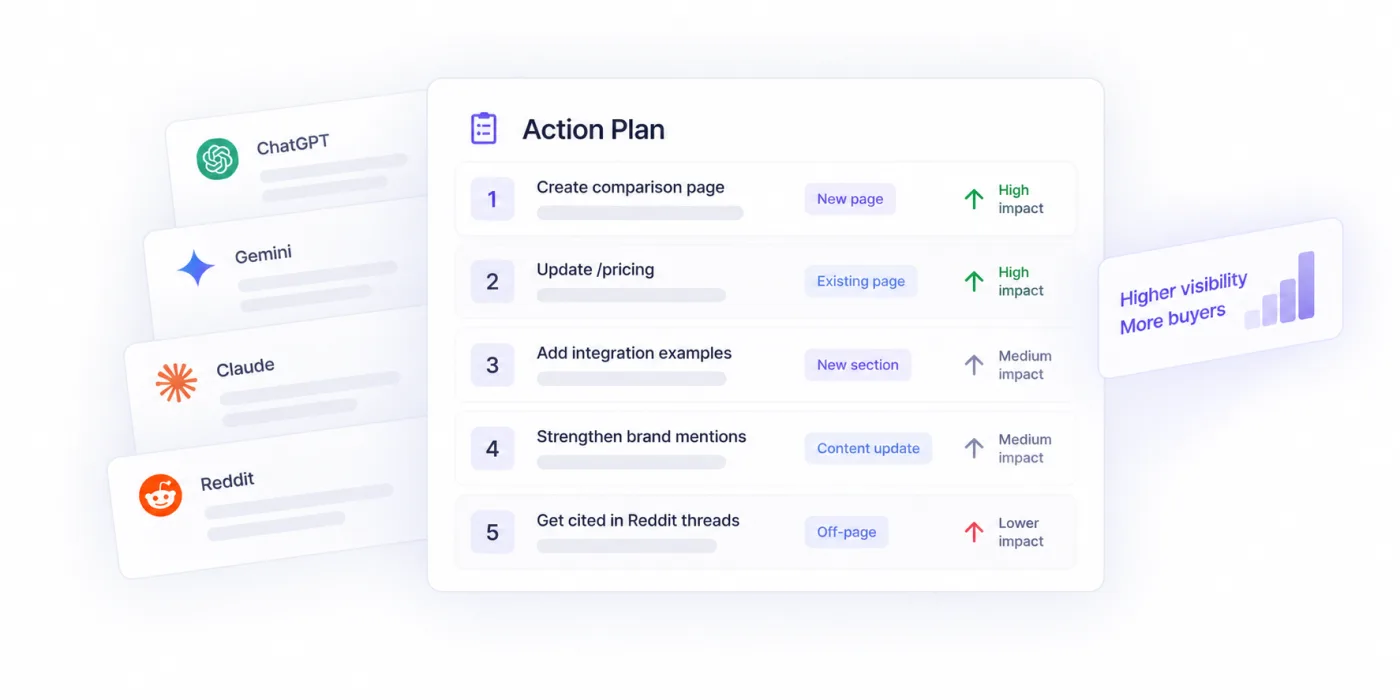
Get clear action items for AI visibility.

Receive prioritized action steps and website fixes designed to improve your AI visibility quickly.

Growth Opportunities
The Growth Opportunities view — every finding turned into a ranked list of moves.